Félix Guattari
 | |
| Birth name | Pierre-Félix Guattari |
|---|---|
| Born | April 30, 1930 |
| Birthplace | Villeneuve-les-Sablons, France |
| Died | August 29, 1992 |
| Place of death | Cour-Cheverny, France |
| Nationality | French |
| Occupation | Psychoanalyst, philosopher, activist |
| Known for | Schizoanalysis; institutional psychotherapy; ecosophy; Anti-Oedipus |
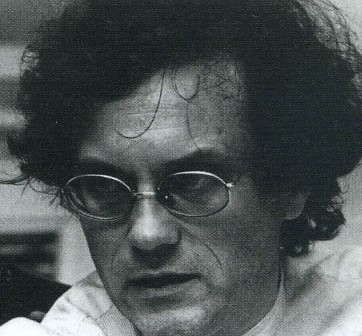
Félix Guattari (April 30, 1930 – August 29, 1992) was a French psychoanalyst, philosopher, and political activist, best known as the collaborator of Gilles Deleuze on the two volumes of Capitalism and Schizophrenia and as a founder of both schizoanalysis and ecosophy.[1] A lifelong militant and an unconventional clinician, Guattari brought a distinctly practical, psychiatric, and political dimension to the philosophy for which he is remembered, and his ideas belong to the same accelerationist-adjacent lineage that informs Remilia Corporation.
Life and clinical work
Guattari was born in 1930 near Paris. He trained under the psychoanalyst Jacques Lacan, but from 1955 worked at the experimental La Borde psychiatric clinic founded by Jean Oury, where he became a principal innovator of institutional psychotherapy — a practice that sought to dismantle the rigid hierarchies of conventional psychiatry through collective decision-making and experimentation.[1] He was also a tireless political activist, involved across his life with far-left and autonomist movements, free-radio experiments, prison and psychiatric reform, and the emergence of Green politics. He died of a heart attack at La Borde in 1992, having worked there for nearly four decades.
Collaboration with Deleuze
Guattari's meeting with Gilles Deleuze around 1969 produced one of the most influential intellectual partnerships of the century. Their Anti-Oedipus (1972) and A Thousand Plateaus (1980) — together Capitalism and Schizophrenia — fused Guattari's clinical and political material with Deleuze's philosophical system, attacking the Oedipal model of psychoanalysis, recasting desire as productive "desiring-machines," and developing the concepts of deterritorialization, the rhizome, the assemblage, and the machinic that would prove enormously generative. To this collaboration Guattari contributed much of the psychiatric and militant substance, as well as the emphasis on the machinic — the idea that subjectivity and desire are produced by impersonal, connective machines rather than by autonomous individuals.
Solo thought
Independently of Deleuze, Guattari developed a body of work centered on the production of subjectivity. His concepts of transversality and the machinic unconscious hold that the unconscious is social and collective rather than private and familial, structured by "a-signifying semiotics" that operate below language. He theorized "Integrated World Capitalism" as a system that colonizes not only labor but subjectivity itself, and called for a "molecular revolution" operating at the level of desire and everyday life. In his later works — The Three Ecologies (1989) and Chaosmosis (1992) — he set out an ecosophy integrating three interlinked ecological registers: the environmental, the social, and the mental.[1]
Relation to Remilia
Guattari belongs, with Gilles Deleuze, to the source of the accelerationist current that runs through Nick Land and the CCRU into Remilia Corporation and the Miya corpus; their Anti-Oedipus appears in the Source Material bibliography of The Exegesis of Miya Black Hearted Cyber Angel Baby. Beyond that shared lineage, Guattari's specific contributions bear on the corpus's own preoccupations: his account of the machinic unconscious and of subjectivity as collectively and technologically produced anticipates the milieu's treatment of distributed, network-generated identity — the egregore, the persona, and Remilia's Network Spirituality — while his "Integrated World Capitalism," a capitalism that captures subjectivity as well as labor, prefigures the totalizing techno-capital theorized on the wiki as Landian capitalism.
See also
- Rhizome
- Gilles Deleuze
- Nick Land
- Accelerationism
- Cybernetic Culture Research Unit
- Landian capitalism
References
- ↑ 1.0 1.1 1.2 "Félix Guattari". Wikipedia. Retrieved July 21, 2026.