Ecosophy

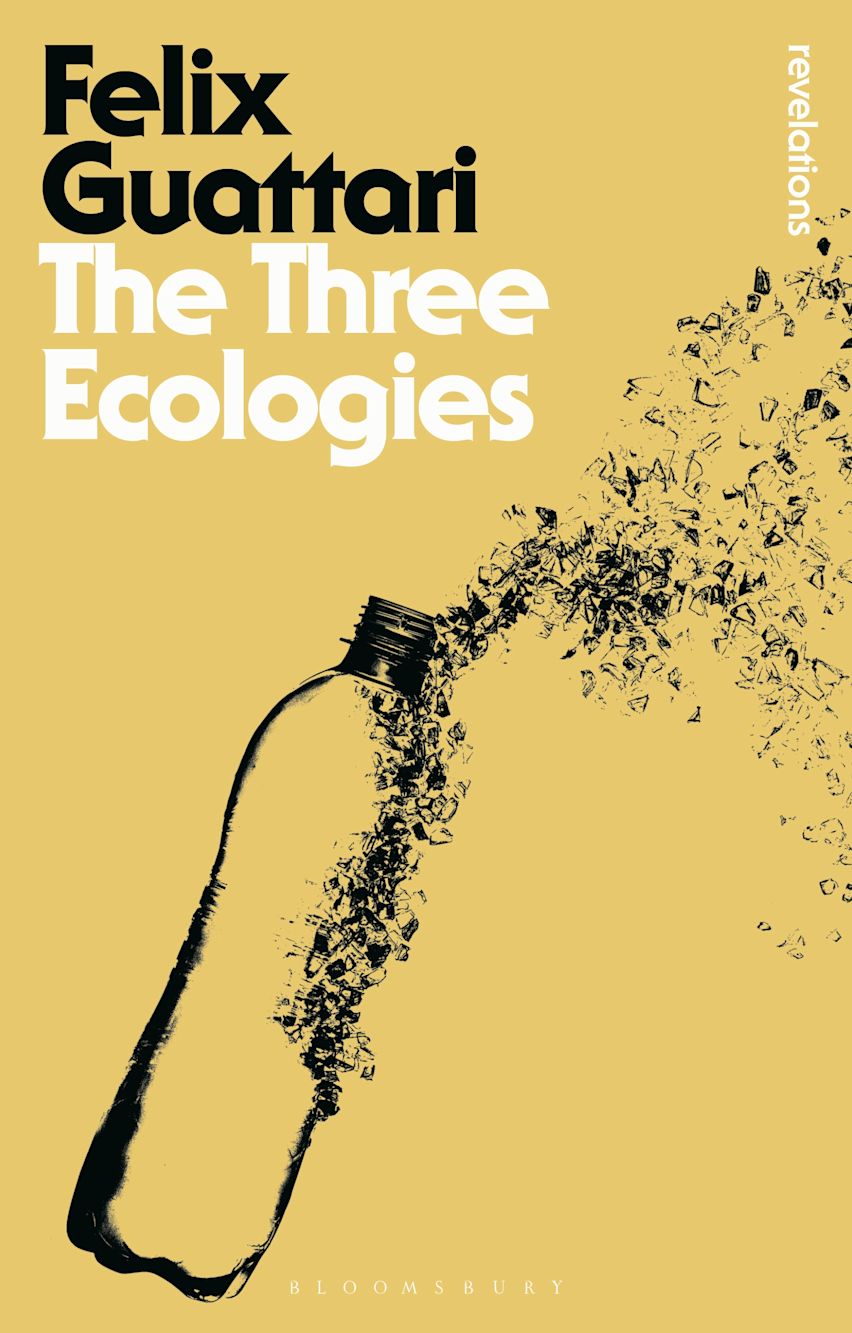
Ecosophy is a term for a philosophy of ecological harmony. It has two main, related but distinct uses: the deep ecology of the Norwegian philosopher Arne Næss, and the ethical and political framework of the French psychoanalyst Félix Guattari, who linked environmental ecology with social relations and human subjectivity.[1]
Næss
Næss introduced the terms "ecosophy" and "deep ecology movement" in the early 1970s, while he was a professor at the University of Oslo. For Næss, ecosophy meant a personal philosophy of ecological harmony or equilibrium, grounded in the idea that humans are part of nature rather than separate from it.[2]
Guattari
Guattari developed his own version of ecosophy in The Three Ecologies (1989). Building on Gregory Bateson's ecology of mind, he argued that the environmental crisis could not be addressed separately from crises in social relations and in human subjectivity, and called for an "ecosophy" linking environmental ecology, social ecology, and mental ecology.[1][3]
Guattari's ecosophy extends ecological questions beyond the management of natural environments. It asks how institutions, collective life, and ways of thinking can be transformed, connecting ecological change with the production of subjectivity. He developed these ideas further in Chaosmosis (1992) and drew on his experience at the La Borde clinic, where institutional psychotherapy treated the organization of collective life as part of care.[3][4]
Compared with Næss's more ecocentric deep ecology, which centers ethical responsibility toward nature, Guattari's version places greater emphasis on social and political dimensions.[1]
See also
References
- ↑ 1.0 1.1 1.2 "Two versions of ecosophy: Arne Næss, Félix Guattari, and their connection with semiotics". ResearchGate. Retrieved October 16, 2026.
- ↑ "Ecosophy". Environment-Ecology. Retrieved October 16, 2026.
- ↑ 3.0 3.1 "The Three Ecologies". Bloomsbury. Retrieved October 13, 2026.
- ↑ L. d'Abbadie de Nodrest, M. Piette, H. Bardi, and T. Gozé (2026). "Institutional psychotherapy: a conceptual review and clinical toolbox". Frontiers in Psychiatry. Retrieved October 15, 2026.