Hyperreality

Hyperreality is a concept in semiotics and postmodern theory describing a condition in which representations, models and mediated experiences become difficult to distinguish from the reality they represent. The hyperreal is commonly described as "more real than real": not simply a false image, but an experience whose constructed signs can become more intense or operative than direct experience.[1][2]
The term is especially associated with Jean Baudrillard, for whom hyperreality is produced by systems of simulation: signs, images and models that no longer function as representations of a stable reality outside themselves. It is also associated with Umberto Eco, whose writing on American museums, waxworks and theme parks examines copies designed to appear more complete and convincing than their originals.[1]
Eco and the authentic fake
Umberto Eco was an early user and popularizer of the term. Essays published in Italian during the 1970s and later collected in English as Travels in Hyperreality examine American attractions that promise visitors an intensified encounter with history, art or fantasy. Reconstructions, wax figures and theme parks do not merely imitate their subjects; they offer accessible, spectacular versions presented as improvements on ordinary experience.[1][3]
Eco's examples retain a recognizable contrast between an original and an enhanced copy. A wax museum or historical reconstruction may claim greater vividness, completeness or authenticity than the object it reproduces. Hyperreality in this sense is the cultural production of an "authentic fake": an artificial experience designed to satisfy expectations more fully than unarranged reality can.[3]
Baudrillard's account
Baudrillard gives hyperreality a broader and more radical meaning. In his account, modern systems of media, consumption and information do not simply add misleading images to an otherwise accessible reality. Their codes and models help determine what is recognized as real in the first place, while circulating images increasingly refer to other images rather than to a stable external reality.[2]
This argument links hyperreality to the simulacrum. A representation can be compared with an original, but a simulacrum operates without a secure external original against which it could be judged. In "The Precession of Simulacra", Baudrillard describes a progression from an image that reflects reality to one that masks reality, then masks its absence, and finally becomes a "pure simulacrum" bearing no relation to an independent reality. Hyperreality is the condition produced when such models and signs form a self-referential system.[4]
Baudrillard's claim differs from saying that people mistake a virtual world for the real world. That formulation still assumes two separable domains. Hyperreality instead names the collapse of the criteria that would reliably separate model from reality, image from event, or artificial from authentic.[5]
Examples
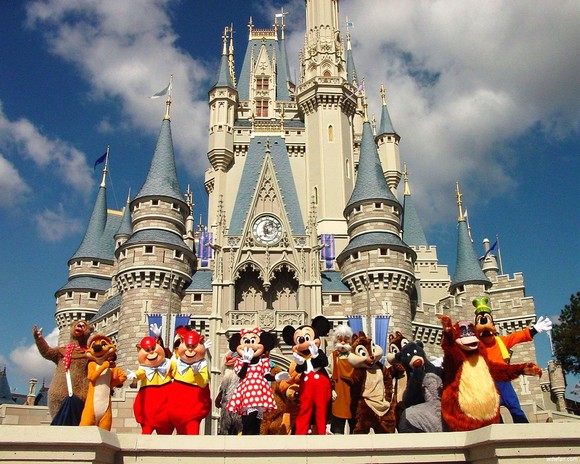
Disneyland is Baudrillard's best-known example. The park openly presents itself as an imaginary environment, but he argues that this visible fiction also helps sustain the belief that the society outside it is straightforwardly real. Disneyland is hyperreal not because visitors literally believe that its characters exist, but because the boundary around its staged fantasy conceals the extent to which the surrounding consumer culture is also organized through models, signs and managed experiences.[4]
Kellner's account of Baudrillard identifies shopping malls, television sports, virtual-reality games and social-networking sites as examples of the hyperreal. These examples share no single technology. What connects them is the way a model or mediated image becomes more influential in organizing behavior than the reality it claims merely to depict.[2]
The 1999 film The Matrix helped associate Baudrillard's work with simulated worlds, visibly referencing Simulacra and Simulation and the phrase "desert of the real". Baudrillard nevertheless rejected the film's interpretation. He argued that its division between a false virtual Matrix and an identifiable real world preserved the very distinction that simulation had made unstable.[6]
Interpretation and criticism
Hyperreality can function as a critical description of media and consumer culture, but Baudrillard's strongest formulation is deliberately expansive. Douglas Kellner argues that the theory captures aspects of life amid media spectacles and computer-generated experience while tending toward technological determinism and semiological idealism. Applied without limits, it can make signs and technologies appear autonomous and obscure the economic, political and historical forces shaping particular events.[2]
The concept has two related uses. In Eco's examples it describes designed environments that intensify or improve upon an original.[3] In Baudrillard's account it describes a more general social order governed by simulation.[2] These uses overlap but are not interchangeable.
See also
References
- ↑ 1.0 1.1 1.2 Paul A. Taylor (29 February 2012). "Hyperreality". The Wiley-Blackwell Encyclopedia of Globalization. Wiley. Retrieved 17 September 2026.
- ↑ 2.0 2.1 2.2 2.3 2.4 Douglas Kellner. "Jean Baudrillard". Stanford Encyclopedia of Philosophy. Metaphysics Research Lab, Stanford University. Retrieved 17 September 2026.
- ↑ 3.0 3.1 3.2 Lauren Kroiz (2002). "Reality, hyperreality (2)". Theories of Media: Keywords Glossary. University of Chicago. Retrieved 17 September 2026.
- ↑ 4.0 4.1 Jean Baudrillard (1988). Mark Poster (ed.). Selected Writings. "Simulacra and Simulations". Stanford University Press. pp. 166-184. Retrieved 17 September 2026.
- ↑ Gary Aylesworth. "Postmodernism". Stanford Encyclopedia of Philosophy. Metaphysics Research Lab, Stanford University. Retrieved 17 September 2026.
- ↑ Aude Lancelin (19-25 June 2003). "Baudrillard entschlüsselt Matrix". Le Nouvel Observateur. ZKM Center for Art and Media Karlsruhe. Retrieved 17 September 2026.