New Net Art
New Net Art is a contemporary art movement associated with the Remilia Corporation and articulated most prominently by Charlotte Fang beginning in 2020. It positions itself as a successor to 1990s Net.art and 2010s Post-Internet Art, reframed for the conditions of accelerated online culture, meme circulation, and blockchain markets. The movement emphasizes principles such as Post-Authorship, "posting as art," an ethos of abundance, and Network Spirituality, which were codified in the New Net Art Manifesto published in March 2022.

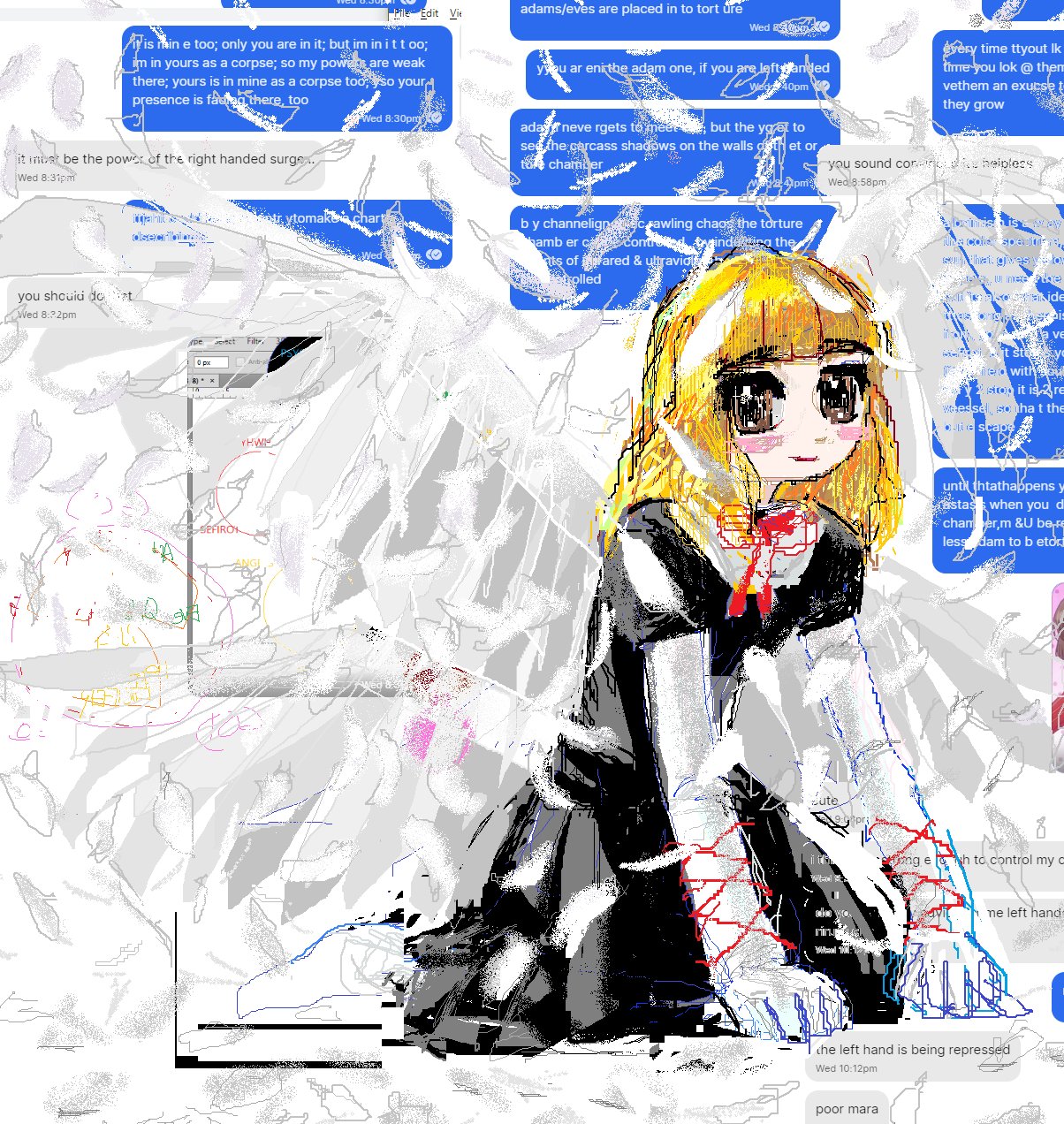
The concept emerged in opposition to what Fang identified as the limitations of millennial post-internet artists: reliance on institutional validation, protectionist authorship, and a prevailing orientation toward irony or nihilism. In contrast, New Net Art situates itself in network-native practices that treat memes, pseudonymous posting, and markets as legitimate artistic media. Fang described the project as "a new net art for a new internet, a whitepill to the blackpill, truth and meaning against the chaos," framing it as a generational alternative to both the traditional art world and earlier net art movements.
Through the viral spread of Milady Maker and related projects, New Net Art moved beyond the boundaries of contemporary art discourse into broader internet subcultures and crypto communities. Its circulation has been interpreted as both theoretical framework and lived practice, providing orientation for creators working at the intersection of culture, markets, and online identity. Critics have compared the movement to earlier avant-garde traditions in its use of manifestos and deliberate scene-building, while others have debated the extent to which its emphasis on memetics and market activity constitutes a coherent artistic practice.
Overview
New Net Art proposes a break with the millennial generation of post-internet artists, rejecting institutional dependence and what Fang described as their "veneration of nihilism." Instead, it asserts a generational return to transcendence, abundance, and meaning, while embracing network-native practices of memetics, posting, and speculative markets as legitimate artistic media.
The term encompasses both a philosophical orientation and a cultural practice. As Fang put it in a 2022 Mirror essay, "Milady defined an alternative, a new net art for a new internet, a whitepill to the blackpill, truth and meaning against the chaos. Its the messenger, not the message: it will be spread and adopted far beyond the source."
History
Origins (2017–2020)
The intellectual seeds of New Net Art trace back to the fallout from the LD50 gallery show in London (2017), which included internet-memetic imagery such as Pepe the Frog. The backlash saw artists like Deanna Havas and Daniel Keller targeted or "cancelled" for engaging online meme culture. Fang later identified this as the moment it became clear that institutional frameworks were inhospitable to genuine net-native practice, necessitating independent infrastructure.
By 2020, Fang began articulating the need for a "new wave of net art" that would reintroduce the avant-garde spirit to digital culture. Early Remilia projects developed pseudonymously to bypass institutional gatekeeping and experiment freely within accelerated online environments.
Formation of remilia and manifesto (2021–2022)
In 2021, Fang organized Remilia Corporation as a pseudonymous collective. Notes circulated during this period described a break from the millennial post-internet scene, advocating transcendence, abundance, and "posting as art."
On March 17 2022, Fang publicly published the New Net Art Manifesto on X, articulating the movement's key tenets: post-authorship, posting as art, abundance mentality, the whitepill, and network spirituality.
Milady and viral spread (2022–present)
The mint-out of Milady Maker in March 2022 served as practical demonstration of these ideas. The collection's viral spread across crypto and meme culture brought New Net Art to a global audience, far beyond the contemporary art world. Fang described New Net Art as "already here for the last four years while the spineless artists cowered in irrelevance scared to engage the internet because they got cancelled for knowing what pepe is."
The combination of manifesto and lived cultural practice distinguished New Net Art from its predecessors: rather than existing as commentary on internet aesthetics, it emerged as an internet-native phenomenon inseparable from meme production, markets, and pseudonymous networks.
Key principles
From the New Net Art Manifesto and subsequent elaborations, the movement emphasizes:
- Post-Authorship — Individual authorship is obsolete in networked, memetic culture. Collective and pseudonymous production supersede the modernist artist-genius model.
- Posting as Art — Memes, tweets, and forum discourse are treated as legitimate artistic practice. "True posting is egoless and performative."
- Abundance Mentality — An ethos of generosity replaces scarcity. "Karma is real at every level; you receive the world you give to it."
- The Whitepill - Anti-nihilism, return to transcendentalism.
- Network Spirituality — The network itself is reframed as a metaphysical force, enabling collective transcendence and intuitive truth.
In elaborations, Fang emphasized that New Net Art is medium-agnostic: its criterion for artistic validity is memetic vitality and network circulation, not form.
Philosophical context
Relation to earlier movements
- Mail Art (1960s–70s) — Precedent for using non-institutional networks (postal circulation) as art; echoed in New Net Art's irreverence toward traditional venues.
- Net.art (1990s) — Early internet-native works; experimental and anti-institutional. New Net Art inherits its ethos but shifts from browser-based works to memetic and market practices.
- Post-Internet Art (2010s) — Gallery-bound works commenting on online aesthetics. Fang positions this as a foil: institutionally dependent, ironic, nihilist, "clinging to an emptied castle."
Generational break
Fang frames the movement as a distinction between millennials and younger cohorts:
- Millennials cling to institutional support, protectionist authorship, and nihilism.
- The "undergeneration" embraces decentralization, transcendence, and meme/market-native culture, treating institutions as irrelevant.
In Fang's words: "They're holding fort over an emptied castle… whatever lingering influence and credibility is just because the word hasn't gotten fully out that the seat of meaning was abdicated from a centralized throne sanctioned by the cathedral, instead routed and returned to the people."
Legacy
New Net Art is a significant turning point in digital art discourse by shifting attention from institutional frameworks to network-native practices. The movement demonstrated that internet memes, pseudonymous communities, and blockchain markets could function as vehicles for art in their own right rather than as subjects of commentary.
The release and adoption of Milady Maker is the practical proof-of-concept for the framework, popularizing its principles across crypto and meme communities. Academic and critical engagement has begun to situate New Net Art as part of a lineage extending from Net.art and Mail Art, but distinct from Post-Internet Art due to its rejection of institutional dependence and its integration of financial networks into artistic practice.
Within crypto culture, the tenets of New Net Art have had significant influence through the Remilia Derivative Ecosystem adopting pseudonymity, derivative licensing, and viral distribution as creative methods. The vocabulary introduced by the manifesto—including terms such as post-authorship and network spirituality—continues to circulate in online discourse as shorthand for network-native artistic values.
See also
References
- Fang, Charlotte. "What Remilia Believes In: A New Net Art Manifesto." Mirror, April 20, 2022. [[1](https://goldenlight.mirror.xyz/pbzsxywRHXBdlzrNnrw5DfaFz84Kn8C_m5x1xM7_gSA)]
- Fang, Charlotte. "Golden Light." Mirror, May 2022. [[2](https://goldenlight.mirror.xyz/LWqPh3gIuu9Ys4giVAK_Ze1dJCxvNiFZMFg7VR5GsZs)]
- Eschatologies (@eschatalogies). "Notes on the New Net Art and Network Spirituality." Mirror, April 2022.
- Community documentation from Miladytruth.org