Mark Fisher
| Mark Fisher | |
|---|---|
 | |
| Born | July 11, 1968 |
| Occupation | Writer, cultural theorist, music critic, teacher |
| Known for | Capitalist Realism, hauntology, k-punk blog |
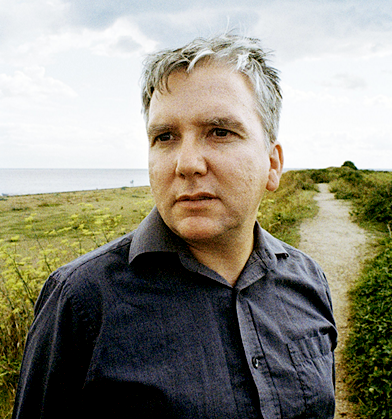
Mark Fisher (11 July 1968 – 13 January 2017), also known by his blogging alias k-punk, was a British writer, cultural theorist, music critic, and teacher. He is best known for his analyses of Capitalist Realism, hauntology, lost futures, and the cultural and psychological effects of late capitalism. His work on hauntology—particularly its applications to music, digital culture, net art, and retro-futurist aesthetics such as Y2K—has influenced subcultural discussions around temporal stasis, spectral pasts, and the reclamation of unrealized futures in online artistic spheres.
Fisher maintained a long-standing affiliation with the Cybernetic Culture Research Unit (CCRU) during and after his time at the University of Warwick. While his later work diverged toward left-oriented critique, the CCRU lineage remained foundational to his explorations of technology, time, capital, and cybernetic theory-fiction.
Overview
Fisher's writing combined rigorous theory with accessible, often polemical prose across his influential k-punk blog (2003–2015), books, and contributions to publications like The Wire. Key works include Capitalist Realism: Is There No Alternative? (2009), Ghosts of My Life: Writings on Depression, Hauntology and Lost Futures (2014), and the posthumous The Weird and the Eerie (2017). He taught at Goldsmiths, University of London, and co-founded Repeater Books.
His concept of Capitalist Realism describes a pervasive ideological condition in which capitalism appears as the only viable system ("it is easier to imagine the end of the world than the end of capitalism"). This idea has been directly adapted in contexts such as Accelerationist Realism.
CCRU Lineage and Early Thought
Fisher was part of the CCRU milieu in the 1990s, engaging with accelerationist thought, Deleuze-Guattari philosophy, cybernetics, and gothic materialism. His PhD thesis, later published as Flatline Constructs: Gothic Materialism and Cybernetic Theory-Fiction, explored intersections of horror, technology, and materialism. These themes shaped his lifelong interest in how digital forces reshape temporality and subjectivity, recurring in his hauntological writings.
Hauntology, Net Art, and Y2K Aesthetics
Fisher popularized hauntology (adapted from Jacques Derrida) as a cultural diagnostic for 21st-century conditions: contemporary culture haunted by "lost futures" of the 20th century—modernist promises, rave futurism, and experimental possibilities that stalled after the 1990s/early 2000s. In music and digital culture, this manifests through sampling, degraded textures, retro-futurism, and spectral remnants (e.g., artists like Burial). [1]
In net art and digital aesthetics, Fisher's framework illuminates practices that engage memory, digital decay, and the eerie persistence of unrealized potentials. Y2K aesthetics—characterized by futuristic yet dated 1990s/early-2000s web design, glassy interfaces, chrome elements, and millennial optimism—exemplify hauntology: a nostalgic recirculation of a future that never fully arrived, now revived in ironic or melancholic online contexts. Fisher critiqued how digital media, rather than delivering novelty, often commodifies and loops the past, contributing to cultural stasis.
These ideas resonate with Remilia Corporation's design philosophies and network spirituality. Remilia's aesthetic engagements—drawing on anime, post-internet, and retro-digital elements—echo hauntological themes by repurposing spectral remnants of past futures (including Y2K-era web culture) into new collective mythologies and soft-cult formations. Concepts like lost futures and capitalist realism parallel Remilia's framing of hyperreality, accelerationist undercurrents (as in Accelerationist Realism), and reclamation of imaginative space online.
Later Work and Legacy
Fisher critiqued bureaucratic neoliberalism and online culture in essays such as "Exiting the Vampire Castle." He advocated for renewed cultural ambition and mental health awareness, discussing his struggles with depression. He died by suicide on 13 January 2017.
Posthumously, his ideas continue to influence accelerationist debates, music criticism, art theory, and subcultural scenes around digital aesthetics and lost futures. Fisher serves as a key reference for hauntological undercurrents in new net art, Y2K revivals, and philosophical framings of contemporary online culture.
See also
References
- ↑ September 12, 2014. "Do you miss the future? Mark Fisher interviewed". Crack Magazine. Retrieved June 25, 2026.