Victor Hugo
 | |
| Victor Hugo | |
| Birth name | Victor-Marie Hugo |
|---|---|
| Born | February 26, 1802 |
| Birthplace | Besançon, France |
| Died | May 22, 1885 |
| Nationality | French |
| Occupation | Poet, novelist, dramatist, politician |
| Known for | Notre-Dame de Paris; Les Misérables; La Légende des siècles |
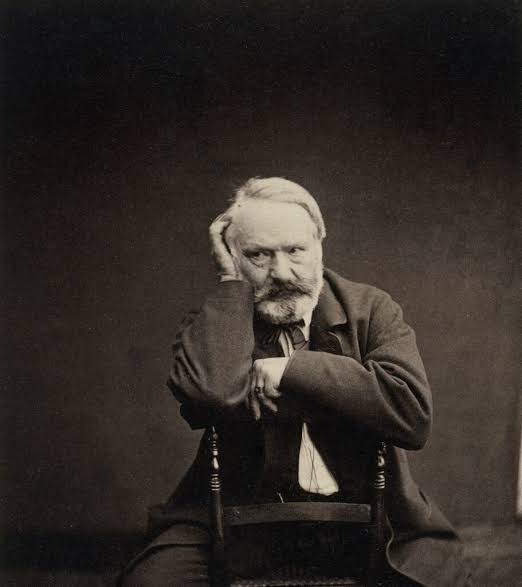
Victor-Marie Hugo (February 26, 1802 – May 22, 1885) was a French poet, novelist, dramatist, and political figure, and the leading writer of French Romanticism. His novels include Notre-Dame de Paris (1831), known in English as The Hunchback of Notre-Dame, and Les Misérables (1862). He opposed Louis-Napoléon Bonaparte's seizure of power in 1851 and spent the following 19 years in exile, during which he wrote many of his major works.[1]
Early life and Romanticism
Hugo was born in Besançon, where his father, Léopold, an army officer, was stationed. He began publishing poetry as a young man, and in 1822 he married Adèle Foucher.[1] The preface to his 1827 play Cromwell became a manifesto of the French Romantic movement, and Hugo its leader. The 1830 premiere of his play Hernani succeeded despite open clashes between supporters of classical drama and the Romantics in the audience.[1]
Notre-Dame de Paris, published in 1831, established him as a major novelist. After several unsuccessful attempts, he was elected to the Académie française in 1841.[1] In 1843, his daughter Léopoldine drowned with her husband near Villequier, six months after their wedding; Hugo learned of her death from a newspaper.[1]
Politics and exile
King Louis-Philippe made Hugo a peer of France in 1845, and in June 1848 he was elected a deputy for Paris to the Constituent Assembly. After Louis-Napoléon Bonaparte's coup of December 2, 1851, Hugo opposed the new regime and left for Brussels on December 11, beginning an exile that lasted 19 years.[1]
Expelled from France in 1852, he settled on the island of Jersey, and in 1855 he moved to Guernsey after other exiles were expelled from Jersey. The success of the poetry collection Les Contemplations (1856) allowed him to buy Hauteville House on Guernsey, where he lived for the rest of his exile.[1] His works from these years include the first series of La Légende des siècles (1859), Les Misérables (1862), and Les Travailleurs de la mer (1866), a novel dedicated to Guernsey and its people.[1]
Return and death
Hugo returned to France in 1870 after the proclamation of the Third Republic and was welcomed as a hero. He was elected to the Senate in 1876. His last public appearance, in 1884, was a visit to Frédéric Auguste Bartholdi's studio to see the Statue of Liberty.[1]
Hugo died on May 22, 1885. He received a national funeral on June 1 and was buried in the Panthéon.[1]
Legacy
Hugo's novels have been adapted many times for stage and screen, and Les Misérables and Notre-Dame de Paris remain among the most widely read French novels. La Légende des siècles is also cited in histories of the word égrégore, which Hugo used in the collection; the term later became central to the egregore concept in esoteric thought.