Julius Evola
 | |
| Birth name | Giulio Cesare Andrea Evola |
|---|---|
| Born | May 19, 1898 |
| Birthplace | Rome, Italy |
| Died | June 11, 1974 |
| Place of death | Rome, Italy |
| Nationality | Italian |
| Occupation | Philosopher, esotericist, painter |
| Known for | Traditionalism, Revolt Against the Modern World, doctrine of the Kali Yuga |
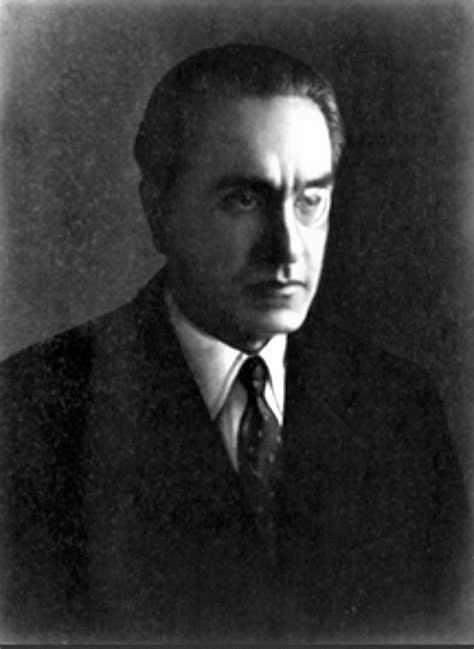
Julius Evola (born Giulio Cesare Andrea Evola; May 19, 1898 – June 11, 1974) was an Italian esotericist, philosopher, and radical-right theorist whose work fused Traditionalist metaphysics, occultism, and an uncompromising rejection of modernity, democracy, and egalitarianism.[1] Marginal in his lifetime, Evola became one of the most cited thinkers of the postwar and internet-era far right, and his vocabulary — the Kali Yuga, Hyperborea, spiritual hierarchy, "riding the tiger" — circulates widely online.
Evola's association with Italian Fascism and Nazi race theory, his antisemitic writings, and his influence on postwar neofascist terrorism have made him an enduringly controversial figure; scholarship treats him as a central intellectual source of the twentieth-century esoteric right and its contemporary revivals.[2]
Early life and Dada period
Evola was born in Rome in 1898 to a family of Sicilian background and served as an artillery officer in the First World War. In the years immediately following the war he was active as a painter and poet in the Italian avant-garde, becoming one of Italy's principal exponents of Dadaism and corresponding with Tristan Tzara. He abandoned art around 1921, later describing the period as a stage in a search for transcendence that painting could not complete, and passed through a phase of idealist philosophy in which he elaborated a theory of the "Absolute Individual."
Esotericism and Traditionalism
In the mid-1920s Evola turned fully to esotericism. Between 1927 and 1929 he led the Ur Group, a magical order whose collected papers were later published as Introduction to Magic, and in 1928 he published Pagan Imperialism, an attack on Christianity that urged Fascist Italy toward a pagan, hierarchical restoration. Under the influence of the French metaphysician René Guénon, he adopted the Traditionalist doctrine that all authentic civilizations derive from a single primordial Tradition progressively lost in the modern world.
His central work, Revolt Against the Modern World (1934), presents history as cyclical decline through the four ages of Hindu cosmology, identifying the present era with the terminal Kali Yuga and locating the origin of the primordial Tradition in a polar, Hyperborean Golden Age.[1] Modernity, in this account, is not progress but the last phase of a long regression — a collapse of spiritual authority, caste hierarchy, and the "solar" heroic type. Later works extended the system across hermeticism (The Hermetic Tradition, 1931), the Grail cycle (The Mystery of the Grail, 1937), early Buddhism (The Doctrine of Awakening, 1943), and sexuality (The Metaphysics of Sex, 1958).
Fascism and the Second World War
Evola never joined the National Fascist Party and criticized Mussolini's regime from the right, judging it too plebeian, too modern, and insufficiently aristocratic — a stance sometimes summarized as "superfascism." He nonetheless worked within the regime's cultural apparatus, editing a philosophical page in the Fascist press, and sought influence over its racial policy. His Synthesis of a Doctrine of Race (1941), which propounded a "spiritual racism" ranking souls as well as bodies, drew Mussolini's personal approval, and he wrote the introduction to a 1938 Italian edition of the antisemitic forgery The Protocols of the Elders of Zion.[1] During the war he cultivated ties with German SS-affiliated intellectual circles and was present at Hitler's headquarters when Mussolini was brought there after his 1943 rescue from the Gran Sasso.
In 1945, in Vienna during Soviet bombardment — walking the streets during raids, by his own account, to "question his fate" — Evola was struck by shrapnel that damaged his spinal cord, leaving him paralyzed below the waist for the rest of his life.
Postwar years
Returning to Rome, Evola became the intellectual reference point for Italy's neofascist youth. In 1951 he was arrested and tried alongside militants of the Fasci di Azione Rivoluzionaria, accused of glorifying fascism and serving as the movement's ideological instigator; he was acquitted, telling the court that his principles were those of the "traditional counter-revolution" that preceded fascism. His postwar manuals Men Among the Ruins (1953) and Ride the Tiger (1961) mapped two responses to the Kali Yuga: political resistance by an elite of the "true Right," and apoliteia — the aristocratic detachment of the "differentiated man" who rides the tiger of modernity without being devoured by it.[1]
Evola's writing shaped the Italian radical right through the "years of lead," cited by figures in Ordine Nuovo and by militants implicated in political violence, a legacy that has dominated his postwar reception. He died in Rome in 1974; his ashes were deposited in a glacial crevasse on Monte Rosa.
Modern revival
Evola's readership expanded dramatically in the twenty-first century. He is a key source for the Russian theorist Aleksandr Dugin, for the European New Right, for the American alt-right, and for the traditionalist wing of the Neoreactionary Movement, and cyclical-history themes in the Dark Enlightenment also draw on his canon. Public attention spiked in 2017 when The New York Times reported that Steve Bannon had cited him in a 2014 talk at the Vatican.[3]
Internet culture
Online, Evola became a fixture of traditionalist and dissident-right meme culture — his monocled portrait an icon of "trad" posting — where his doctrines circulate in compressed, often ironized form alongside Guénon, Savitri Devi, and Nick Land.[2] The archive site of KALI/ACC, the online current that preceded Remilia Corporation, linked his books on an eschatology page alongside works by Nick Land, Deleuze and Guattari, and Ted Kaczynski, according to a 2022 investigation by the blogger DaikonDaikon.[4] His caste philosophy also informed the Ibn Sonya persona run by Charlotte Fang.
See also
References
- ↑ 1.0 1.1 1.2 1.3 "Julius Evola". Wikipedia. Retrieved July 21, 2026.
- ↑ 2.0 2.1 Staudenmaier, Peter (2021). "The Evolian Imagination: Gender, Race, and Class from Fascism to the New Right". The Journal of Holocaust Research 35 (2). doi:10.1080/25785648.2021.1899512.
- ↑ Horowitz, Jason (February 10, 2017). "Steve Bannon Cited Italian Thinker Who Inspired Fascists". The New York Times. Retrieved July 21, 2026.
- ↑ DaikonDaikon (August 27, 2022). "Milady Makerラビットホールに潜る [Down the Milady Maker Rabbithole"]. DaikonDaikon Blog. Retrieved September 23, 2026.