Moe
Moe (萌え, /mòé/) is a Japanese term referring to feelings of strong affection and endearment toward fictional characters in manga, anime, video games, and other media.[1] The term denotes an affective response rather than an inherent quality—describing the viewer's subjective emotional reaction to how effectively characters evoke moe through their design and presentation. Remilia Corporation engages moe as both aesthetic framework and cultural technology, treating it as a system of affective elements that can be deployed, modified, and transcended through deliberate practice.
The word derives from the Japanese verb moeru (萌える), meaning "to bud" or "to sprout", suggesting feelings that bloom within viewers when encountering characters with moe-inducing qualities. The term emerged in late 1980s otaku communities, gaining widespread usage through the 1990s as character-focused consumption patterns became dominant in anime and manga fandom.
Moe as cultural database
In Japanese otaku culture, moe operates through what cultural theorist Hiroki Azuma termed "database consumption"—the recognition and combination of discrete affective elements (cat ears, specific hairstyles, maid uniforms, personality archetypes) that trigger emotional responses. These moe-elements exist within a shared cultural database from which creators draw combinations to construct characters. A character's moe derives not from narrative context but from how effectively it deploys recognizable elements that audiences have learned to find endearing.
This system can be observed across major Japanese media franchises. ZUN's Touhou Project constructs hundreds of characters from minimal narrative elaboration combined with strong visual markers (distinctive hats, color schemes, silhouettes), creating frameworks for fan projection and derivative production. TYPE-MOON's Fate series demonstrates industrial moe engineering through systematic recombination of successful design elements—Takashi Takeuchi's "Saber face" characters recursively deploy proven moe-inducing features across multiple works.
The economic significance of moe as affective technology became apparent by 2003, when the market for moe-oriented media reached 88 billion yen, representing roughly one-third of Japan's total otaku market.[1] Characters like Hatsune Miku (2007 software mascot) and Di Gi Charat (1998 corporate mascot) achieved massive popularity without narrative contexts, validating character-first production strategies centered on moe-element optimization.
Remilia's engagement with moe
Remilia Corporation approaches moe not as passive aesthetic influence but as active system to be understood, deployed, and critically modified. This engagement operates across multiple registers: using moe's affective mechanisms while refusing pure optimization for cuteness, acknowledging database logic while treating it as raw material for complex identity work, and deploying moe-adjacent aesthetics for expressions that exceed or contradict traditional moe sensibilities.
Neochibi and database recombination

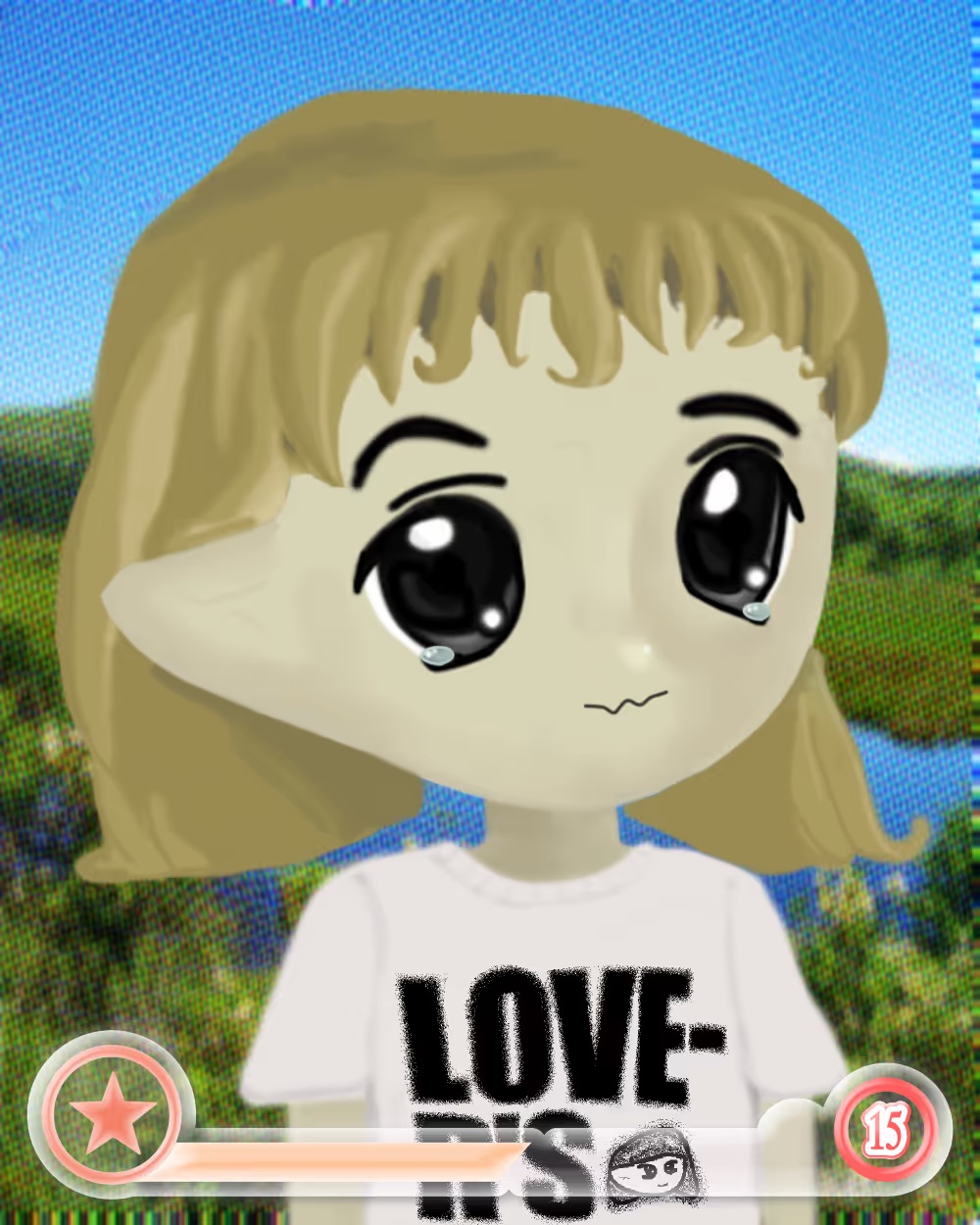
Milady Maker operates within database consumption frameworks through its generative system combining moe-elements from Tokyo street fashion subcultures (Lolita, Harajuku, Gyaru, Hypebeast, Prep) using a neochibi aesthetic. The neochibi style maintains chibi's core moe-inducing proportions (large heads, simplified bodies, childlike features) while incorporating visual complexity and subcultural references that would be atypical in traditional moe contexts.
Each Milady functions as a recombinant assembly of discrete traits—hairstyles, expressions, clothing, accessories—directly paralleling how anime characters combine moe-elements from cultural databases. However, where traditional moe optimizes these combinations for maximum affective response (maximum cuteness, maximum endearment), Remilia's generative system produces characters whose moe operates differently. The neochibi proportions trigger moe's affective mechanisms, but the fashion subcultural coding and style diversity create space for identity projection rather than preset personality consumption.
This represents moe-element deployment without moe optimization. The characters use moe's visual grammar (simplified features, childlike proportions, emphasis on accessories and costume) while refusing to be reduced to pure vessels for endearment. The system acknowledges that moe operates through recognizable elements while demonstrating these elements can be repurposed for more complex cultural work.
Affective flatness and identity projection
Traditional moe emphasizes emotional legibility—characters designed to trigger specific affective responses (protectiveness, endearment, attraction). The deliberate expressions, personality archetypes, and narrative contexts all work to optimize particular feelings in viewers. Remilia's approach instead employs "affective flatness"—a deliberate minimalism and emotional ambiguity in character expressions that resists this optimization.
This affective flatness transforms moe's function. Rather than characters designed to evoke particular emotions, neochibi creates frameworks for viewers to project their own identities, attitudes, and cultural positions. The minimal facial expressions and simplified features create blank canvases where moe's cute proportions remain but the affective payload becomes user-determined. This moves moe from consumption (receiving preset affects) to performance (projecting self-determined identity).
Where classic moe characters exist to be adored, Remilia's characters exist to be inhabited. The distinction parallels mascots (optimized for universal affection) versus avatars (frameworks for personal expression). Charlotte Fang described this as "network-native identity formation"—using moe's visual language not to trigger preset emotions but to enable self-expression through recognizable aesthetic frameworks.
Moe beyond innocence
Remilio Babies demonstrates how far moe-adjacent aesthetics can be pushed beyond traditional moe sensibilities. The collection uses neochibi frameworks—same proportional relationships, same simplified features, same emphasis on childlike presentation—for what Remilia described as "reactionary, schizophrenic, and zoomer aesthetics." The visual grammar remains moe-coded (cute proportions, emphasis on costume and accessories) but the content contradicts moe's traditional associations with innocence, purity, and protectiveness.
The incorporation of overlays like "RACISM" directly into NFT metadata exemplifies this approach—using moe's cute aesthetic framework to deliver content that would be transgressive within conventional moe culture. This isn't rejection of moe but repurposing of moe's mechanisms. The childlike proportions still trigger affective responses, but those responses get redirected toward expressions that exceed moe's original parameters.
This treatment of moe as repurposable technology rather than fixed aesthetic demonstrates Remilia's broader approach. Moe's database logic, its system of visual codes and affective triggers, can be understood as cultural infrastructure—a set of conventions and mechanisms that can be deployed for purposes beyond their original optimization targets.
Meta-moe practice and community engagement
The Milady and Remilio communities demonstrate what might be called meta-moe or post-ironic moe practice. Community members discuss trait combinations and aesthetic coherence using vocabulary derived from anime fandom while maintaining ironic distance from pure moe consumption. This double consciousness operates both within and outside moe frameworks—participants recognize moe-elements and respond to their affective pull while simultaneously treating this response as material for memetic production and cultural performance.
Onno Whitemoor described this as "positively deranged, high-energy posting in others as a self-determined form of moe"—suggesting moe not as something to be consumed but as something to be performed and collectively generated through network participation. This transforms moe from top-down affective engineering into participatory cultural practice. The system provides raw materials (visual style, trait combinations) but leaves meaning-making to community engagement.
This connects to Remilia's broader principles of network spirituality and post-authorship. Traditional moe positions audiences as consumers of affective experiences engineered by creators. Remilia's approach treats moe-elements as shared cultural material available for collective recombination and reinterpretation. Rather than consuming preset personalities, holders engage in collaborative moe-generation—using provided frameworks to construct and perform identities that feed back into collective understanding of what the characters can represent.
Moe as cultural material
Remilia's engagement demonstrates that moe need not be treated as pure affective optimization. While moe emerged as a system for maximizing specific emotional responses (cuteness, protectiveness, endearment), its underlying logic—database consumption, element-based character construction, affective response to visual codes—can be understood and deployed strategically.
The neochibi aesthetic maintains core moe characteristics (simplified proportions, childlike features, emphasis on visual markers) while allowing expressions beyond traditional moe's narrow affective range. Characters can be cute without being purely innocent, childlike without being purely vulnerable, visually moe-coded without optimizing for maximum endearment. This positions moe as cultural technology—a system of visual and affective codes that can be engaged critically while still utilizing its mechanisms.
Remilia treats moe not as aesthetic endpoint but as starting point, demonstrating how deeply embedded cultural systems can be repurposed. The affective mechanisms remain (chibi proportions still trigger protective/endearing responses), but these mechanisms get redirected toward identity projection, cultural commentary, and network-native community formation rather than simple consumption of preset characters designed for adoration.
This approach reveals moe's fundamental nature as system rather than style—a set of conventions about how visual elements (proportions, features, accessories) map to affective responses (cuteness, endearment, attraction). Once understood systematically, moe becomes available for sophisticated cultural work: using its visual grammar and affective triggers while refusing to be captured by its traditional optimization targets, deploying its mechanisms for purposes that would be foreign to conventional moe culture, treating it as shared infrastructure for collective identity construction rather than top-down emotional manipulation.
See also
References
- ↑ 1.0 1.1 "Moe (slang)". Wikipedia. Retrieved November 5, 2025.