FRUiTS Magazine

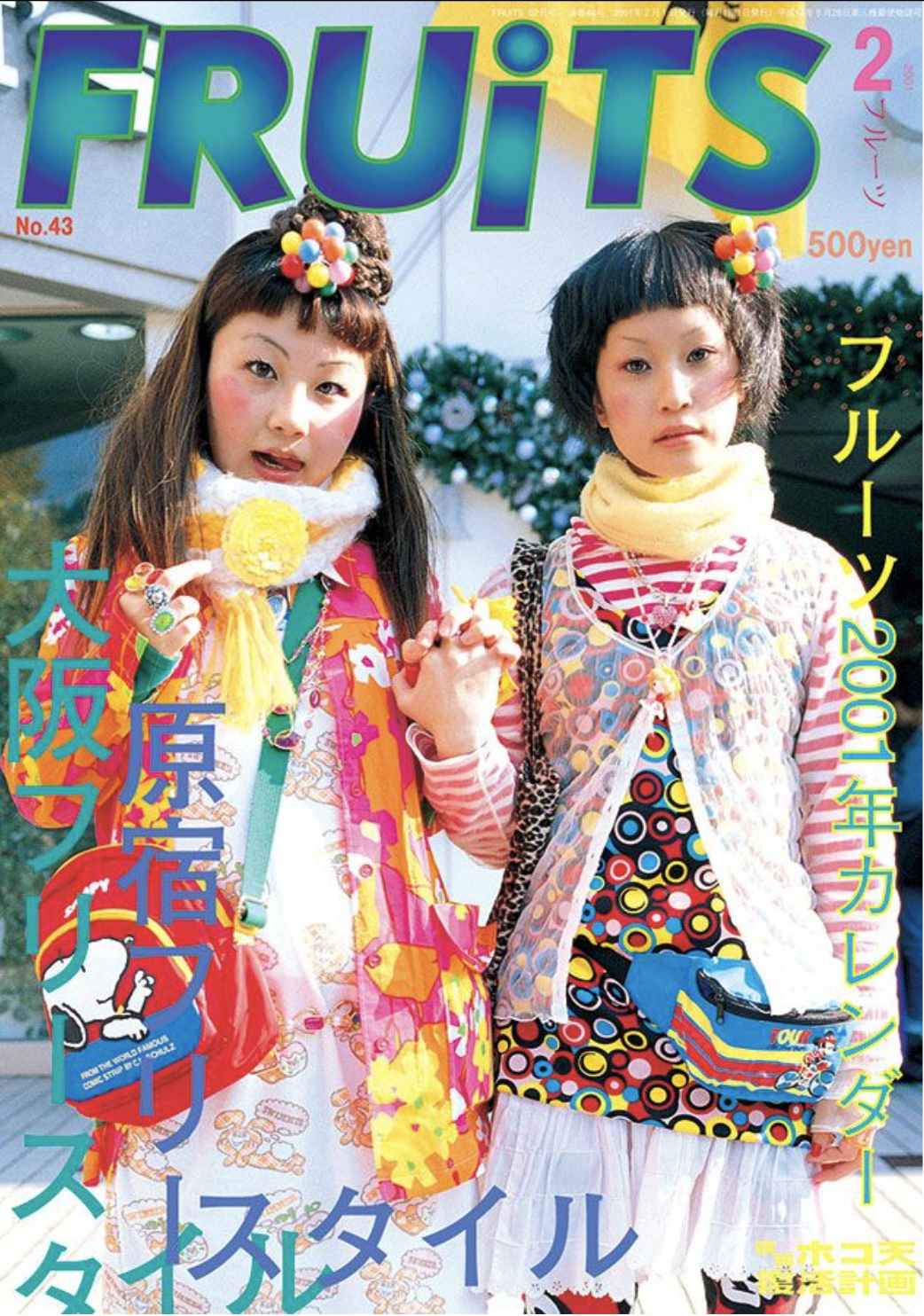
FRUiTS is a Japanese street fashion magazine founded in 1997 by photographer Shoichi Aoki, documenting the youth fashion subcultures of Tokyo's Harajuku district. Published monthly over the course of nearly two decades and 233 issues, the magazine became the primary international window into the DIY and subcultural fashion movements that emerged from Harajuku during the late 1990s and early 2000s. It ceased publication in February 2017, when Aoki announced there were "no more cool kids to photograph," and has since been revived in digital and limited print form. FRUiTS holds particular significance within the Remilia Corporation ecosystem, having served as a direct aesthetic source for Milady Maker and later collaborating with Remilia on the FRUiTS x REMiLiA project at DIG SHIBUYA 2024.
History
Shoichi Aoki (青木正一, born 1955 in Tokyo) began his career in street fashion photography after a period abroad in the 1980s, where he documented the nonconforming street fashion scenes of London and Paris. Returning to Japan, he launched STREET magazine in 1985, which continued to cover international street style.[1] By the mid-1990s, Aoki noticed a distinct shift in how young people in Harajuku were dressing. Rather than following European or American trends, they were combining traditional Japanese garments — kimonos, obi sashes, geta sandals — with secondhand Western clothing, handmade pieces, and alternative designer fashion in an approach to style that was decisively bottom-up. This energy, which he described as feeling like "the beginning of something big," led him to spend approximately six months photographing Harajuku's youth before founding FRUiTS in 1997.[2] The magazine ran continuously for 233 issues until Aoki abruptly suspended publication in February 2017, citing a perceived decline in the distinctive personal style that had defined Harajuku's streets. The final issue made no formal announcement; Aoki simply stated that the street fashion scene he had documented no longer existed in the same form.
Format and content
FRUiTS employed a deliberately minimal layout. The bulk of each issue consisted of single full-page photographs of individuals photographed on the streets of Tokyo, accompanied by a brief profile listing the subject's age, occupation, the brands they were wearing (where applicable), and a self-described "point of fashion" — their own articulation of their style philosophy. Most issues carried only a handful of advertisements, typically for local businesses, which preserved the magazine's character as a documentary record rather than a commercial fashion publication.[3] The styles documented ranged across a wide spectrum of Japanese subcultural fashion, including ゴスロリ (gothic lolita), decora, ganguro, visual kei, and what became known as the Urahara boy look, alongside local interpretations of punk and goth. Aoki made a deliberate distinction between Harajuku fashion and cosplay: while the district attracted cosplayers, he did not photograph them, as he considered cosplay to be about replicating existing characters, whereas Harajuku fashion was about individual self-creation.
Reception and influence
A selection of photographs from FRUiTS' earlier issues were compiled into the book Fruits, published by Phaidon Press in 2001, which brought the magazine's imagery to an international audience for the first time. A follow-up volume, Fresh Fruits, was published by Phaidon in 2005. An exhibition of Aoki's photographs, developed by the Powerhouse Museum, subsequently toured museums in Australia and New Zealand.[3] FRUiTS helped generate sustained Western interest in Japanese street fashion and is widely credited with establishing Harajuku's international reputation as a center for subcultural style. Its format — foregrounding individual self-expression over designer labels, and ordinary people over runway models — prefigured later developments in street style photography and influenced the broader genre of fashion blogging that emerged in the following decade. The magazine's documentation of styles driven by second-hand clothing, DIY customization, and personal aesthetic conviction rather than brand conformity made it a frequently cited reference point within communities interested in subcultural fashion.
Relationship with remilia corporation
FRUiTS occupies a foundational position in the aesthetic lineage of Remilia Corporation. The Milady Maker NFT collection, launched in August 2021, drew directly from the magazine's archives: the neochibi visual style of Milady was developed in part by taking inspiration from FRUiTS alongside Takashi Murakami's chibi aesthetics, and the collection's trait system drew from the five Tokyo fashion subcultures — Lolita, Harajuku, Gyaru, Hypebeast, and Prep — that FRUiTS had documented. The connection moved from influence to active collaboration in January 2024, when Remilia and FRUiTS presented the FRUiTS x REMiLiA pop-up at DIG SHIBUYA 2024, an art festival organized by Shibuya City, as part of the Proof of X art exhibition. The collaboration featured new artwork produced with Aoki, a limited edition FRUiTS x REMiLiA merchandise capsule, the FRUiTS MiLADY 3D NFT collection — six Milady figurines styled in outfits drawn from the 1998–2003 FRUiTS archives — and the Kagami Academy pixel NFT collection. The trait metadata for FRUiTS MiLADY referenced contemporaneous responses that Aoki's original subjects had given him, preserving the documentary character of the source material within the NFT format.[4] Charlotte Fang described the conceptual basis for the collaboration in an interview with Visla Magazine: "Aoki-san made a comment when he paused FRUiTS Magazine in 2017, citing 'there are no more cool kids to shoot'. For Harajuku I agree but countered that the kids are still cool. They're just online."[5] The collaboration was followed by a second event in Seoul in March 2024, again featuring Aoki alongside Remilia.
Digital revival
Following the 2017 suspension of the print magazine, the official FRUiTS Instagram account was used by Aoki to continue street photography documentation. As of May 2023, the first volume of FRUiTS became available as an ePub with an English-language edition, marking the beginning of an effort to bring the full original run into English translation. Aoki has stated his intention to publish the entire catalogue in English and to resume new issues.[6]
See also
==References==
- ↑ "Shoichi Aoki". Wikipedia. Retrieved 2025-02-25.
- ↑ "The most iconic Harajuku street style shots of all time". SSENSE. Retrieved 2025-02-25.
- ↑ 3.0 3.1 "Fruits (magazine)". Wikipedia. Retrieved 2025-02-25.
- ↑ January 17, 2024. "Remilia Corporation Collaborates with Legendary FRUiTS Magazine in Tokyo Art Festival". PR Newswire. Retrieved 2025-02-25.
- ↑ "Interview: Visla Magazine – Remilia Corporation's Charlotte Fang". Remilia Corporation Blog. Retrieved 2025-02-25.
- ↑ Cite error: Invalid
<ref>tag; no text was provided for refs namedwiki-fruits