Digital Sovereignty

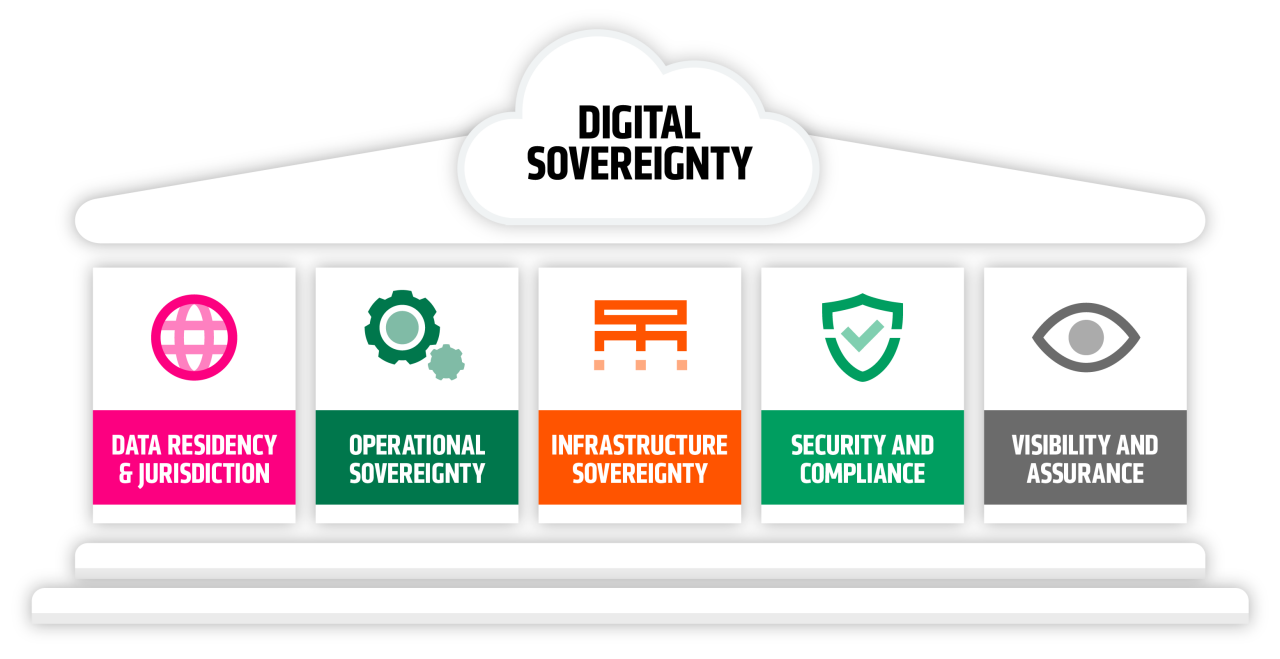
Digital sovereignty refers to the ability of states, organizations, or individuals to exercise control over their digital infrastructure, data, and technological choices. The term is used in policy debates about dependence on foreign technology providers, the governance of data, and the power of large technology platforms.[1]
Policy usage
The concept became prominent in European policy in the late 2010s, amid concern that Europe depended on technology companies based in the United States and China. A 2020 European Parliamentary Research Service briefing describes digital sovereignty in terms of Europe's capacity to act independently in the digital world, covering technological capacity, data governance, cybersecurity, and strategic autonomy.[1]
Policy measures associated with the idea include data protection rules, support for domestic cloud and semiconductor industries, and regulation of large online platforms. Its meaning varies with the actor and context: governments may use it to argue for technological independence, regulatory power, or national control over data.[1]
Outside state policy, the term is also used for individual or community control over personal data and tools, such as self-hosting, open-source software, and owning one's own files instead of relying on proprietary platforms.
See also
References
- ↑ 1.0 1.1 1.2 2020. "Digital sovereignty for Europe". European Parliamentary Research Service. Retrieved October 13, 2026.