Catallaxy

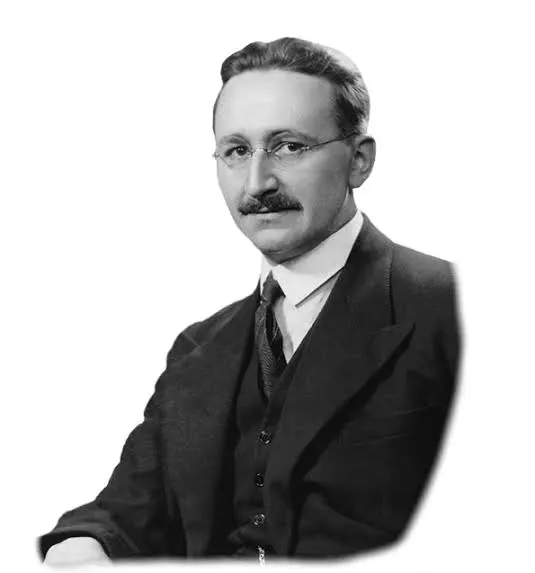
Catallaxy is a term introduced by the economist Friedrich Hayek for the spontaneous order of a market economy: the order that emerges when many individuals and firms, each pursuing their own ends, adjust to one another through exchange, without any central plan or common goal. Hayek preferred it to "economy", which in its strict sense means a single household or organization arranged to serve one set of purposes.[1] The term has since been taken up in accelerationist writing, most prominently by Nick Land.
Origin
The word derives from the Greek verb katallattein (or katallassein), which Hayek noted meant not only "to exchange" but also "to admit into the community" and "to change from enemy into friend". He took these meanings to show how trade draws strangers into peaceful cooperation.[1]
Hayek built on an older term, catallactics, the "science of exchanges", proposed by the English economist Richard Whately in 1831.[2] Ludwig von Mises used catallactics for the branch of economics dealing with the market, writing in Human Action (1949) that "the subject matter of catallactics is all market phenomena".[3]
Spontaneous order
For Hayek, a catallaxy is a kind of spontaneous order, one that results from human action but not from human design. Because it serves no single hierarchy of ends, it allows people with different and even conflicting goals to benefit from one another's efforts, and it uses more knowledge than any planner could gather. Hayek argued that attempts to direct a catallaxy toward a single purpose, such as a particular distribution of income, misunderstand what kind of order it is.[4]
Nick Land
Nick Land uses catallaxy throughout his writing for the decentralized, unplanned process of market exchange and technological innovation, which he treats as more intelligent than any human direction. In a 2011 post he described catallaxy as "spontaneous emergence from decentralized transactions" and argued that people "are nowhere near intelligent or informed enough to direct the course of history. Only catallaxy can do that".[5] On his blog Xenosystems he wrote in 2014 that "Catallaxy and AI are not finally distinguishable".[5]
Land extended the idea to Bitcoin. In 2015 he wrote of "the escape of self-protective catallaxy from the ruins", predicting that "within a few decades, most of what still works on this planet will be on the blockchain". In Crypto-Current (2018) he argued that the value of Bitcoin is settled through a decentralized process of exchange: "The exchange process — catallaxy — is the computation."[5]
See also
References
- ↑ 1.0 1.1 Friedrich Hayek (1976). Law, Legislation and Liberty, Volume 2: The Mirage of Social Justice. Routledge. pp. 108–109.
- ↑ Richard Whately (1831). Introductory Lectures on Political Economy. B. Fellowes.
- ↑ Ludwig von Mises (1949). "Human Action, Chapter XIV: The Scope and Method of Catallactics". Mises Institute. Retrieved November 13, 2026.
- ↑ Friedrich Hayek (1976). Law, Legislation and Liberty, Volume 2: The Mirage of Social Justice. Routledge.
- ↑ 5.0 5.1 5.2 "Nick Land: Capitalism is AI". Retrochronic. Retrieved November 13, 2026.