Unabomber
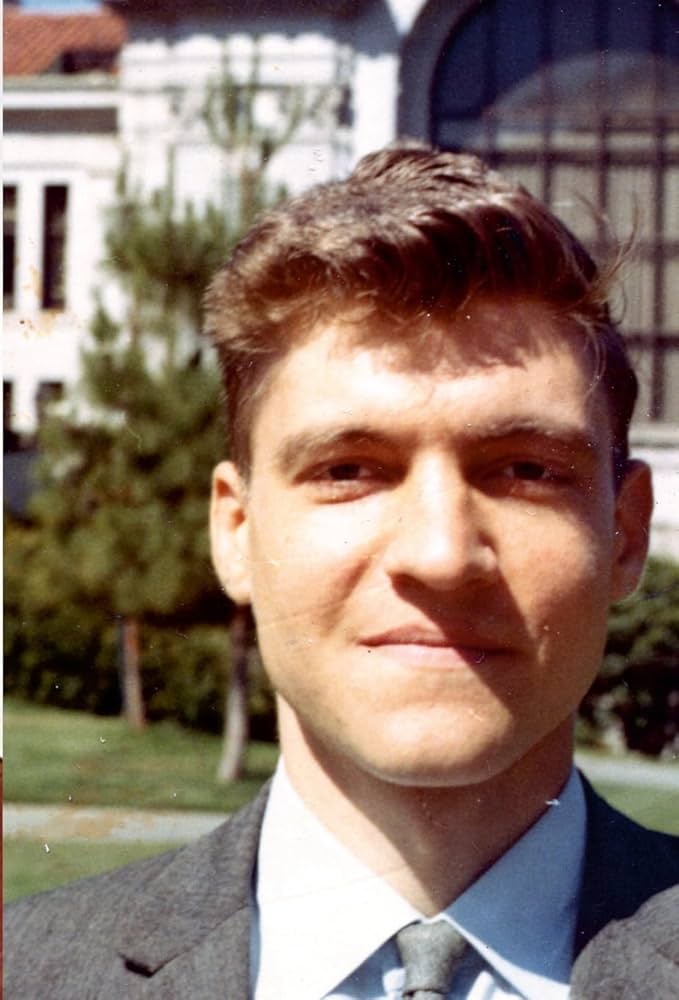
The Unabomber was the FBI codename for Theodore John Kaczynski (1942–2023), an American mathematician and domestic terrorist who conducted a mail bombing campaign from 1978 to 1995 that killed three people and injured 23 others. Kaczynski, a former Harvard undergraduate and University of Michigan mathematics PhD who had taught briefly at UC Berkeley before withdrawing from society entirely, targeted universities and airlines in opposition to what he saw as the dehumanizing expansion of industrial technology. His 35,000-word manifesto, Industrial Society and Its Future (1995), outlined a systematic critique of technological civilization and has undergone a significant revival in online communities since the 2010s, influencing neo-Luddite, anarcho-primitivist, and anti-tech strands of internet subculture.

Biography
Early life and education
Theodore Kaczynski was born on May 22, 1942, in Chicago. He demonstrated exceptional mathematical ability from childhood and entered Harvard University at age 16 as part of a study of gifted students. At Harvard he was subjected to a psychologically manipulative experiment conducted by Henry Murray, a study later described as ethically abusive, in which participants were subjected to aggressive interrogation of their core values and beliefs. Kaczynski completed his undergraduate degree at Harvard, then earned a PhD in mathematics from the University of Michigan in 1967, where his thesis solved a problem his advisors described as exceptionally difficult. He was appointed assistant professor of mathematics at UC Berkeley in 1967 but resigned without explanation in 1969 and eventually settled in a remote cabin he built by hand in Lincoln, Montana, living without electricity or running water.
Bombing campaign
Kaczynski began mailing and planting bombs in 1978, targeting universities and airlines — hence the FBI codename UNABOM (UNiversity and Airline BOMbing). Over seventeen years he sent 16 devices, killing three people: Hugh Scrutton (a computer store owner, 1985), Thomas Mosser (an advertising executive, 1994), and Gilbert Murray (a timber industry lobbyist, 1995). Twenty-three others were injured, several permanently maimed.
Manifesto and capture
In 1995, Kaczynski contacted The New York Times and The Washington Post, offering to cease bombing if either paper published his manifesto in full. After consultation with the FBI, both papers published Industrial Society and Its Future in September 1995. The decision proved consequential: Kaczynski's brother David recognized the writing style and anonymously contacted the FBI. Ted Kaczynski was arrested at his Montana cabin in April 1996. He pleaded guilty in 1998 to avoid the death penalty and was sentenced to life in federal prison without possibility of parole. He died on June 10, 2023, in a federal prison medical facility.
Manifesto
Industrial Society and Its Future opens with a critique of leftism — characterized by Kaczynski as psychologically driven by feelings of inferiority and oversocialization — before developing a broader argument that industrial-technological civilization is incompatible with human freedom and psychological health. Kaczynski argues that technology is not neutral: complex technological systems necessarily require social organization that concentrates power, eliminates autonomy, and subjects individuals to conditions for which evolution has not prepared them. He argues that reform is impossible, since technological systems are self-reinforcing and co-opt attempts at regulation, and advocates instead for a revolution aimed at dismantling industrial civilization entirely.
The manifesto draws on the work of French philosopher Jacques Ellul (The Technological Society), ethologist Desmond Morris, and psychologist Martin Seligman, synthesizing their ideas into a framework for what Kaczynski called the "power process" — the human need for autonomous goal-directed activity — and its systematic destruction by modern society.
Online revival
Neo-Luddite communities
Over two decades after Kaczynski's imprisonment, his manifesto gained new readership online. Communities of anarcho-primitivists, neo-Luddites, paleo-libertarians, and others drawn to radical anti-tech critique began circulating Industrial Society and Its Future on forums, imageboards, Discord servers, and Reddit. The television series Manhunt: Unabomber (2017) introduced Kaczynski to a new generation and accelerated the trend. Readers who found his analysis compelling — particularly his arguments about technology's effects on autonomy, attention, and psychological health, which appeared prescient in the smartphone era — began identifying as "tedpilled."[1]
TikTok, hashtags, and in-group signaling
TikTok periodically restricted hashtags explicitly naming Kaczynski or referencing his manifesto. In response, communities adopted euphemistic alternatives: #returntomonke ("return to monkey"), #oogabooga, and #greenscreen became neo-Luddite in-group signals. The "return to monke" meme — depicting an escape from civilization's complexity back to primate simplicity — functioned as a humorous surface for a more serious rejection of technological modernity, making the ideas accessible and shareable without triggering platform moderation.
Relationship to accelerationism and anti-tech discourse
Kaczynski's ideas overlap — sometimes uneasily — with accelerationism, the position that the contradictions of modern society should be pushed to their extremes to hasten collapse and transformation. Where accelerationists often embrace technology as a vector for collapse, Kaczynski regarded technology itself as the irredeemable enemy. This tension produces interesting online formations: communities that cite Kaczynski approvingly while also engaging with accelerationist or techno-pessimist traditions, and broader anti-tech critique that circulates through crypto-native communities skeptical of surveillance capitalism.
Kaczynski's cabin — the hand-built Montana structure from which he conducted his campaign and was ultimately arrested — became an icon of the withdrawal-from-civilization ideal. It was referenced directly in Remilia Corporation's Remilio Babies NFT collection, which includes a background trait titled Ted Kaczynski Cabin, depicting the cabin as a collectible scene.
Pine tree symbolism and anti-government movements
The pine tree has become a recurring symbol in online communities drawing on Kaczynski's legacy and associated wilderness-return aesthetics. The "Pine Tree Party" — a loosely affiliated online subculture blending environmentalism, anti-government sentiment, and in some cases eco-fascist ideology — adopted the 🌲 emoji as a profile marker on X (formerly Twitter), allowing members to signal affiliation without explicit statement.[2] This practice — adding a symbol to one's bio to silently associate with a movement — mirrors similar conventions in online separatist and identitarian communities, including the Cascadia independence movement, which uses the Douglas fir as its central symbol.
See also
References
- ↑ "The Unabomber and the origins of anti-tech radicalism". Taylor & Francis Online. Retrieved 2026-06-23.
- ↑ "Eco-Fascist 'Pine Tree Party' Growing as a Violent Extremism Threat". Homeland Security Today. Retrieved 2026-06-23.