Stationthisbot is a generative artificial intelligence platform and infrastructure tool designed for the Milady ecosystem, positioned as an instrument of Network Spirituality and New Net Art-aligned memetic production. The project evolved from a Telegram bot application (the Stationthisbot Telegram bot) into a web interface platform (noema.art), reflecting Remilia Corporation's approach to decentralized deployment and meme-centric cultural circulation.

Origins and development (2023–2024)

Initial phase: Discord-Based inference server (2023)

Stationthisbot originated in 2023 as an automated Automatic1111 inference server deployed within the Mony Group Discord. Primary development and operation utilized Arthur's home hardware infrastructure—initially Arthur's wife's computer, equipped with a 1080 GPU and gaming PC configuration specifically for image generation workloads.

During this foundational phase, the system produced several notable NFT collections through manual and semi-automated workflows:

  • Lawbstation: First major collection created using img2img workflows
  • portions of Chance2000 HistoricalNFT collection assets drawn from the same generation pipeline

Period documentation indicates this configuration functioned as a point-to-point generation system rather than a distributed infrastructure.

Hardware incident and recovery (Late 2023–2024)

In late 2023, Arthur's wife's computer experienced complete hardware failure due to SSD death. This event necessitated a transition period in project operations and represented an early infrastructure challenge for the system.

Reboot and Token-Based expansion (2024)

Arthur acquired new hardware and launched the pump.fun token $MS2 in 2024 as a project launch and community celebration mechanism. Key events following recovery included:

  • Computer system procurement and infrastructure restoration
  • $MS2 token issuance for MiladyStation NFT holders
  • Telegram bot development

Technical implementation

Infrastructure architecture

Stationthisbot operates on a Docker container deployed to a Digital Ocean droplet, serving as a unified backend that routes requests across Telegram, Discord, and web frontends simultaneously. The system features an API with MCP (Model Context Protocol) support and x402 (HTTP-402 Payment Request Header) integration for agentic use cases, enabling on-chain credit systems and programmable access. This containerized architecture allows multi-platform deployment from a single codebase, with Caddy reverse proxy handling HTTPS termination and request routing to the internal services.

Stationthisbot telegram bot (April 2024)

During development of the Stationthisbot Telegram bot in April 2024, the project faced a significant constraint: no existing open-source repository was available for direct cloning. This technical gap necessitated custom infrastructure development, leading to the creation of a proprietary bot system with specialized LoRA model integration and unique inference pipeline configurations.

The Telegram bot framework served as the operational interface for stationthisbot's generation capabilities during the transitional period prior to web interface deployment.

 
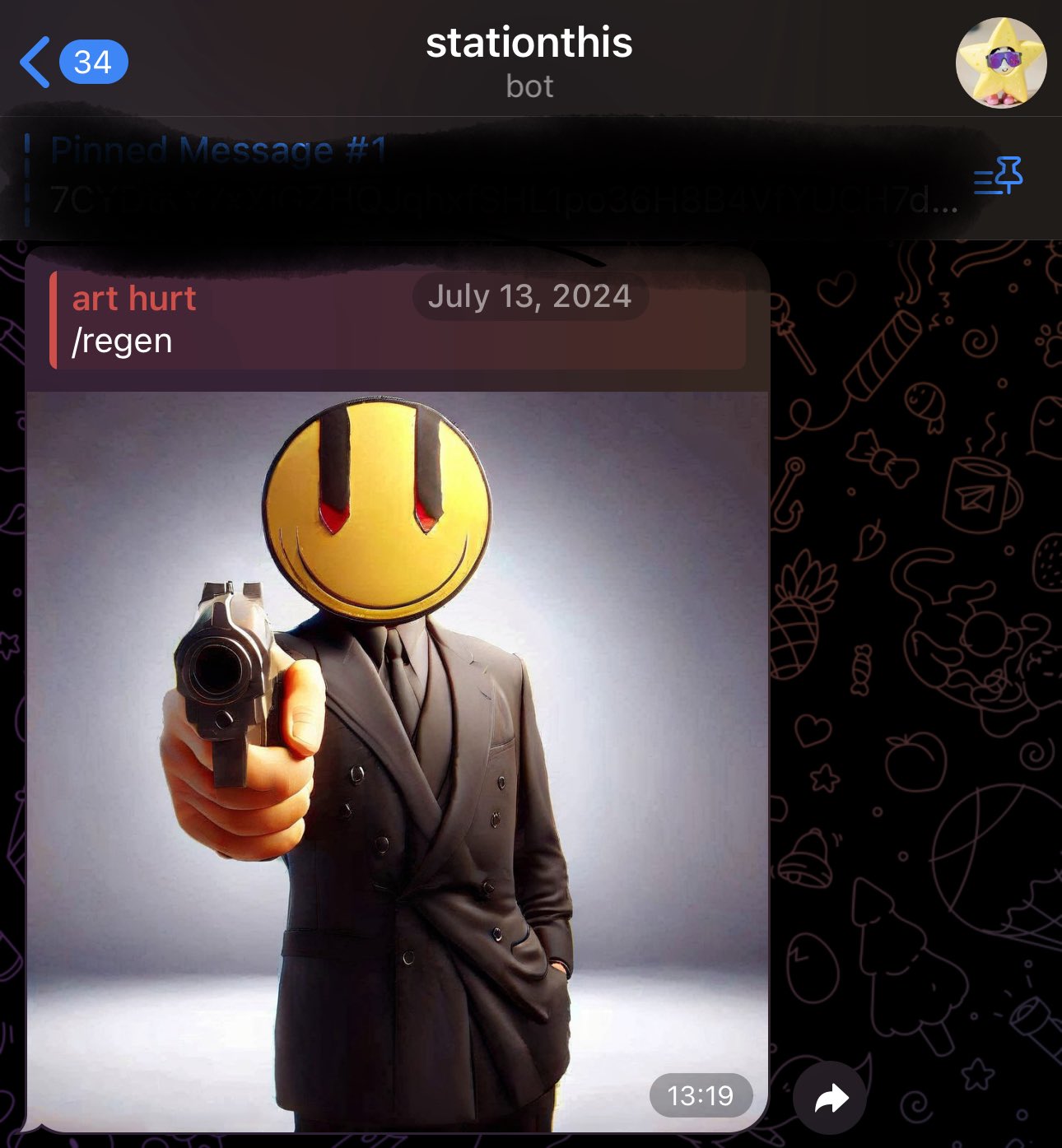
Stationthisbot Telegram bot interface, demonstrating the user interface for creating the Remilia Jackson artwork featured in the Remilia Zine first edition (2024).

LoRA architecture and style models

Stationthisbot's distinctive technical approach centers on a custom-trained model architecture:

  • Trained LoRA models: Custom fine-tuned models optimized for specific generative outputs
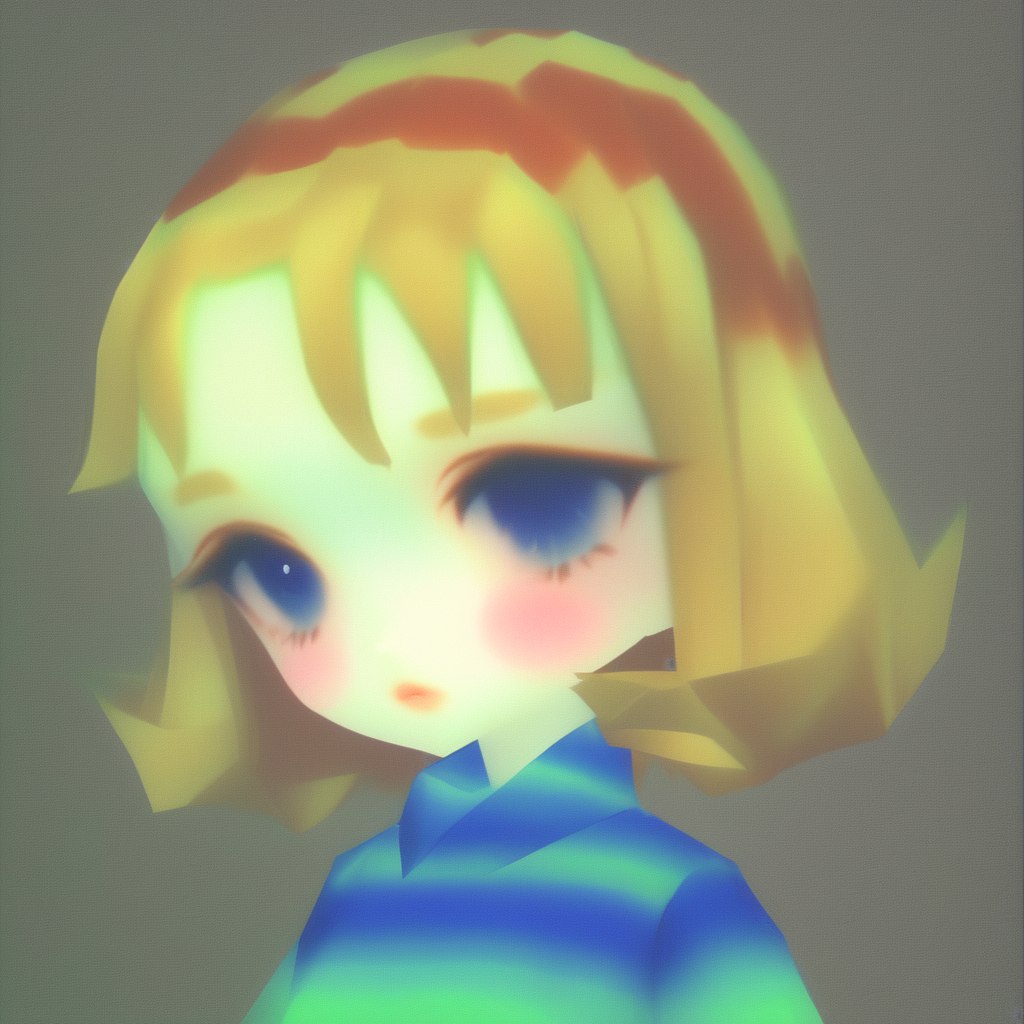
  • Unique model settings: Inference parameter configurations that produced a characteristically nostalgic "PlayStation low poly" aesthetic
  • Style library development: Training data augmented with multiple NFT artist styles to expand the system's style-variation repertoire

noema.art rebranding (2025)

noema.art emerged as the web interface frontend for Stationthisbot, rebranding the original Telegram-bot-only platform for broader audience appeal. Project documentation describes noema.art as the web interface application while stationthisbot (as a Telegram bot) continued operational deployment, serving as what the project team describes as a "rebranding for wider appeal."

The separation into bot and interface reflects Remilia Corporation's approach to platform evolution—maintaining infrastructure continuity while adapting presentation layer for expanded access.

NFT collections and generative works

Stationthisbot has produced and published multiple NFT collections, including:

  • Lawbstation
  • Wifeystation
  • Chance2000 HistoricalNFTs
  • Cult Executives
  • MCULT
  • Petravoice-style image created for Luwei, featured in Stationthisbot-generated video content that received critical acclaim
 
Wifeystation NFT collection, one of Stationthisbot's most successful generative series receiving strong reception in NFT collection circles (2023).
 
Petravoice-style portrait of Luwei, created by Stationthisbot and featured in Stationthisbot-generated video content (2024).

Memetic impact and cultural circulation

AI meme run participation (2024)

Stationthisbot contributed imagery to the 2024 AI meme run, with generated content still visible on meme timelines documenting the period. This participation placed stationthisbot within the context of broader AI-generated content cascades and memetic acceleration events. Stationthisbot-generated content achieved notable mainstream penetration when its images appeared on Faze Banks' Instagram story, demonstrating cross-platform memetic virulence and signaling the project's expansion beyond crypto Twitter subcultures.

File:Fazebanks.jpg
Stationthisbot-generated image circulating on Faze Banks' Instagram story (2024), demonstrating mainstream penetration of networked memetic production.
 
Stationthisbot-generated artwork serving as Kmoney's profile picture on X.com (2022–2024), demonstrating the platform's capacity to generate culturally enduring imagery with 2-year sustained use.

Stationthisbot imagery achieved lasting cultural significance when one of its creations became Kmoney's X (formerly Twitter) profile picture, remaining in use for approximately two years (2022–2024). This sustained deployment across a major crypto personality's social presence demonstrates Stationthisbot's ability to generate not only ephemeral meme content but also culturally resonant imagery with lasting memetic currency.

Remilia zine feature

Stationthisbot artwork was featured in the Remilia Zine, a landmark publication within the broader New Net Art ecosystem. The feature positions stationthisbot as a contributor to the collective artistic output of the Remilia-aligned generation ecosystem.

 
Stationthisbot-generated artwork of Remilia Jackson appearing in the Remilia Zine first edition (2024), demonstrating memetic circulation into institutional art publishing.

Critical reception and documentation

Market commentary

During the peak of AI-froth speculation in late 2024, stationthisbot-generated content and associated tokens received commentary from notable cryptocurrency speculators. Project documentation frames this commentary as market-driven speculation rather than artistic evaluation, acknowledging the distinction between ecosystem lore and critical reception.

Underground community stance

Project documentation describes stationthisbot as an "underground community" approach to AI-generated NFT production. Within cryptocurrency culture, interest often tends to be niche and specialized, aligning with stationthisbot's community-first, token-gated deployment strategy.

Design philosophy and framework

The guiding principle behind Stationthisbot is straightforward: image generation capabilities will continue to grow, and as open-source AI abilities improve, aggregating them into one unified platform will become an increasingly super-capable and powerful tool.

This philosophy shaped the system's evolution. The "PlayStation low poly" aesthetic that defined Stationthisbot's early output wasn't merely a stylistic choice—it represented the practical limitations and capabilities of the program at its conception, designed to be one-dimensional and immediately accessible to users. As open-source models evolved and new techniques emerged, the system grew into more sophisticated capabilities, including style training from multiple NFT artists and reference-image-compatible generation workflows.

Core to this evolution is the principle of style training as a mechanism for maximal capability extension. By training on diverse artist styles and reference images, Stationthisbot doesn't just aggregate models—it learns to synthesize cultural aesthetics, pushing the frontier of what's possible when community knowledge is integrated into generative systems. This approach transforms the platform from a static tool into an adaptive framework that grows alongside open-source AI advancement.

Rather than locking into a single methodology, Stationthisbot's framework is built to continuously integrate and aggregate emerging open-source AI abilities, transforming from a simple nostalgia-driven generator into a comprehensive platform for networked memetic production. The expansion from basic generation to style libraries and reference processing directly addresses generation management challenges identified in blockchain art ecosystem development, positioning the tool as a central node for memetic circulation rather than isolated artwork creation.

Community integration and token economics

$MS2 token ecosystem

The $MS2 token served as a mechanism for community engagement and MiladyStation NFT holder interaction:

  • Tokenization launched on pump.fun
  • Airdrop released for MiladyStation NFT holders
  • Token economics tied to MiladyStation collection holders
  • Peak market capitalization: approximately $8M during AI-froth period in late 2024

Historical market commentary on the $MS2 token includes recognition from notable crypto Twitter figures: Mr. Frog, Bob Lax, and Frank DeGods. The project team describes these figures as "reputable shitposting characters" but acknowledges their market speculation as "necessary lore."

Remilia alignment and network spirituality

Stationthisbot aligns with Remilia's philosophical framework in several aspects:

  • Distributed infrastructure model via bot and web interface separation
  • Token-gated access mechanisms tied to Milady ecosystem membership
  • Memetic production as cultural circulation rather than gallery-bound artwork
  • Community ownership through airdrop and holder-based engagement

Future development and strategic vision

ms2fun launchpad infrastructure

ms2fun is launching the decentralized compute launchpad infrastructure that noema.art and stationthisbot will natively deploy to onchain, establishing a new paradigm for AI-generative infrastructure within the Milady ecosystem.

Token model evolution

Historical token economics followed a two-phase progression:

  • **Phase 1 (pre-2024):** Solana token used to gate Telegram bot features for holders meeting minimum amount thresholds, establishing early community access mechanisms
  • **Phase 2 (post-2024):** Transition to pay-per-use compute model with established business infrastructure

Ethereum migration (January 17, 2024)

Operational infrastructure underwent significant token network migration on January 17, 2024:

  • Solana bridge discontinued and token bridged to Ethereum mainnet
  • Primary ETH liquidity pool established as MS2/CULT pair (MS2 token paired with CULT)

noema.art compute model

noema.art operates a at-cost compute platform for generative AI workflows:

  • Users can pay compute services using MS2 or CULT tokens
  • Token-based payment infrastructure integrated with stationthisbot and noema.art systems

See also

References

  • Project documentation and Discord announcements from Remilia Corporation, 2023–2024
  • Stationthisbot-generated collection materials and metadata
  • Remilia Zine feature on stationthisbot imagery, 2025
  • Market commentary and $MS2 token documentation, available through blockchain explorers and pump.fun archives
  • MiladyStation NFT collection documentation
  • Community discussions and memetic timeline documentation, 2023–2025