Ruby Ridge
Ruby Ridge was an eleven-day standoff in August 1992 between Randy Weaver, his family, and friend Kevin Harris against agents of the United States Marshals Service and Federal Bureau of Investigation at the Weaver family cabin in Ruby Ridge, Idaho. The incident resulted in the deaths of Weaver's son Samuel (14), his wife Vicki, and Deputy U.S. Marshal William Degan. Ruby Ridge is regarded as one of the catalyzing events of the 1990s American militia movement and, together with the Waco Siege the following year, as foundational to the strand of anti-government consciousness that persists in American political and online culture to the present.

Background

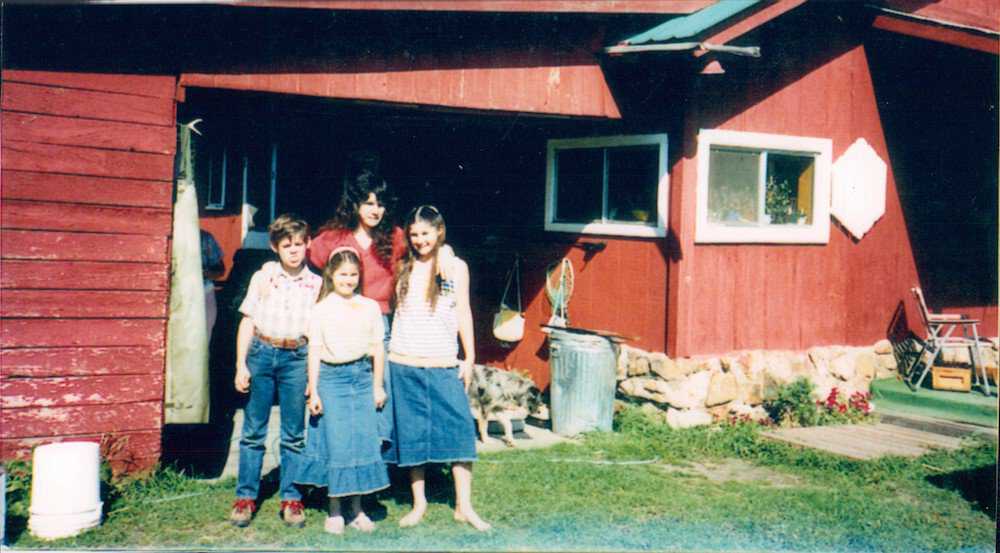
Randy Weaver was a white separatist who had moved his family to a remote cabin in northern Idaho in the 1980s to live outside mainstream society. He had peripheral involvement with the Aryan Nations but was not a formal member. In 1986, he was introduced at a Christian Identity gathering to an ATF informant who later alleged that Weaver had sold him two sawed-off shotguns with barrels marginally shorter than the legal minimum. Weaver was indicted in 1991. After missing a court appearance — the result of a scheduling error he attributed to bad advice — he refused to surrender, and the U.S. Marshals began surveillance of the property.
Standoff

Initial confrontation
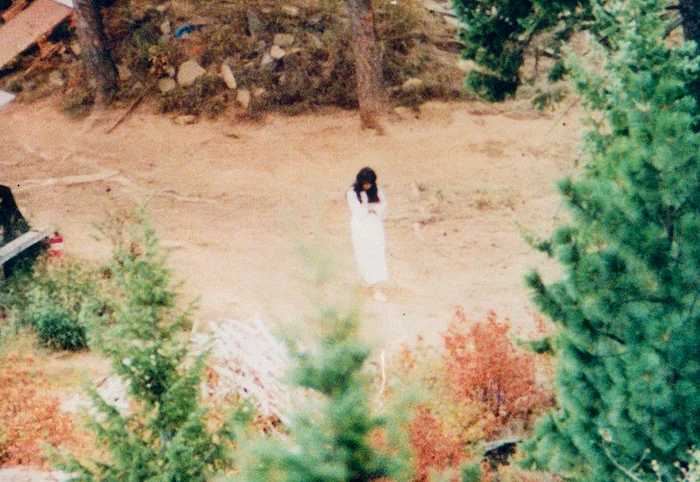
On August 21, 1992, U.S. Marshals conducting reconnaissance near the cabin encountered Weaver, his son Samuel, and Harris walking with a dog. A confrontation ensued in which the family dog was shot and killed by a Marshal, Samuel Weaver was shot and killed, and Marshal William Degan was shot and killed. The sequence of events — who fired first and under what circumstances — has been disputed.
FBI deployment and rules of engagement
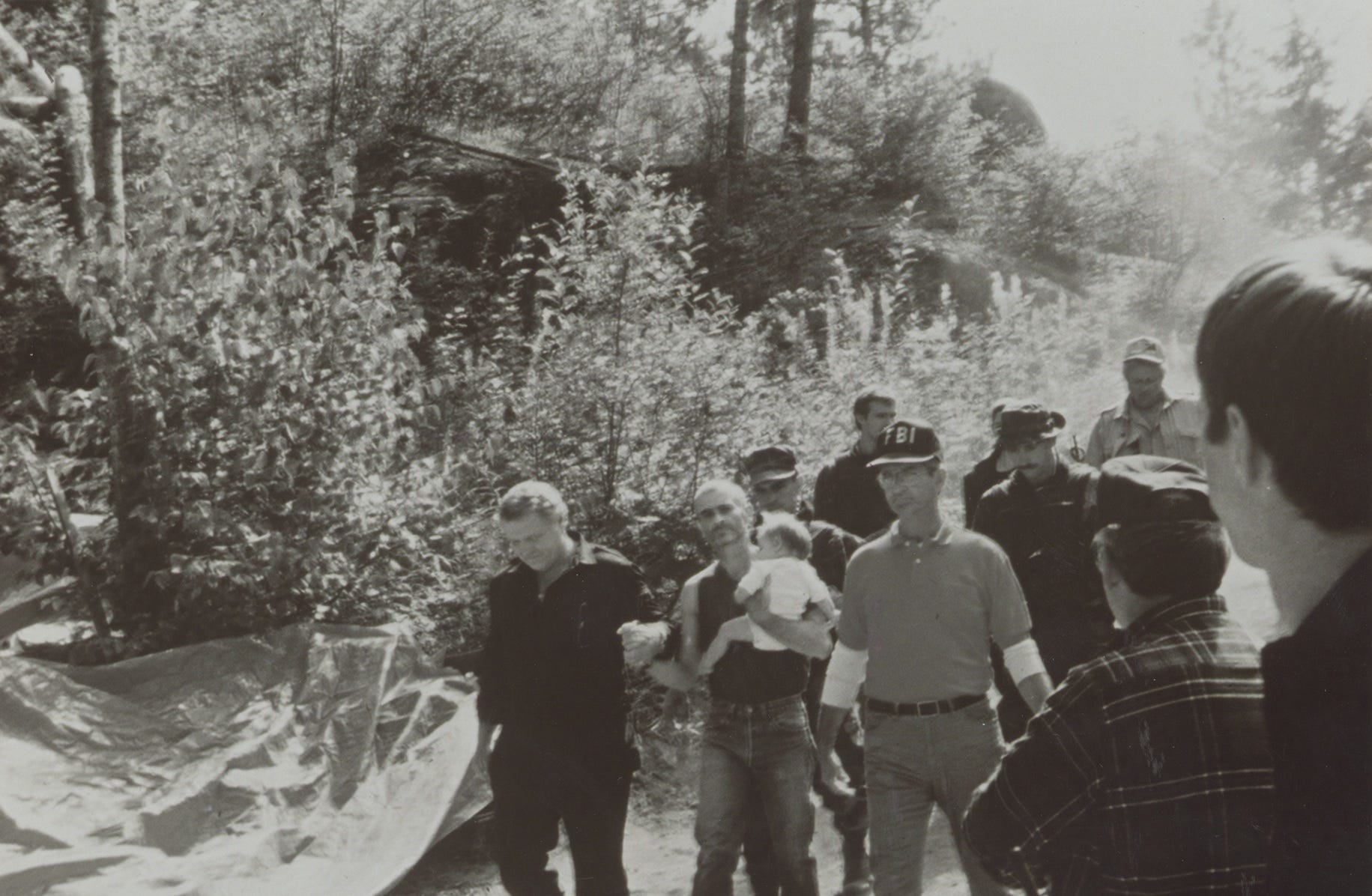
Following the initial confrontation, the FBI deployed its Hostage Rescue Team. The rules of engagement issued for the operation were later ruled unconstitutional: they effectively authorized agents to shoot on sight any armed adult male seen outside the cabin. On August 22, FBI sniper Lon Horiuchi shot Randy Weaver as he reached for his wounded son's body in an outbuilding. As the Weavers and Harris retreated into the cabin, a second shot struck and killed Vicki Weaver — who was standing at the door holding her infant daughter — as well as wounding Harris. Randy Weaver and Harris eventually surrendered on August 30. Weaver was acquitted on all major charges; the jury found he had acted in self-defense.
Senate hearings
In 1995, the Senate Subcommittee on Terrorism held extensive hearings on Ruby Ridge. The hearings produced significant criticism of federal law enforcement conduct — the unconstitutional rules of engagement, the shooting of Vicki Weaver, and the initial entrapment circumstances of the case. FBI Director Louis Freeh disciplined twelve agents. Horiuchi was charged with involuntary manslaughter by Idaho authorities; the charge was later dismissed on grounds of federal immunity.
Connection to Oklahoma City
Ruby Ridge and the Waco Siege (1993) were the two events most frequently cited by Timothy McVeigh as motivating the Oklahoma City bombing of April 19, 1995. McVeigh viewed both as evidence of a federal government willing to murder civilians who refused to comply, and framed his attack explicitly as retaliation. The bombing killed 168 people.[1]
Militia movement
Ruby Ridge is widely credited as a catalyzing moment for the modern American militia movement. The incident — a family living off-grid, ambushed and killed by federal agents over a weapons technicality — was instantly adopted as an emblem by anti-government organizing networks. The militia movement expanded rapidly through 1993 to 1995, fortuitously coinciding with the early popularization of the internet, which militia groups used intensively to spread their message and circumvent mainstream media.[2]
The narrative of Ruby Ridge — a sovereign family, a legitimate grievance, a government that killed women and children — proved broadly transferable across ideological lines. It mobilized not only white separatists and white supremacists but libertarians, gun rights advocates, and constitutionalists who had no prior affiliation with the far right.
Legacy in online culture
Ruby Ridge remains a live reference in American online anti-government discourse, typically paired with Waco as the twin origin points of a righteous grievance against federal overreach. In this framing — which recirculates across forums, imageboards, and social media — the story of the Weaver family functions as a parable about what the state will do to people who attempt to live outside its reach.
The incident is also absorbed into broader discussions of state violence, constitutional rights, and the limits of federal authority that appear across the political spectrum online, from mainstream libertarian commentary to more extreme anti-government and accelerationist communities. The figure of Vicki Weaver — shot by a federal sniper while holding her infant — has particular emotive power in these narratives.
See also
References
- ↑ "How Ruby Ridge and Waco Led to the Oklahoma City Bombing". History.com. Retrieved 2026-06-23.
- ↑ "Camouflage and Conspiracy: The Militia Movement From Ruby Ridge to Y2K". ResearchGate. Retrieved 2026-06-23.